The post Silent Fronts: Grey Zone Warfare and the Protection of Europe’s Critical Infrastructure appeared first on Zaun Limited.
]]>Recent attacks on the Polish rail network and growing pressure on power grids show how grey zone tactics have moved from theory into daily reality. They also demonstrate the continuing importance of physical protection for critical sites.
Understanding Grey Zone Warfare
Grey zone operations include sabotage, cyber intrusion, misinformation and low level physical interference. The objective is simple. Increase the cost of defence, delay logistics, damage confidence and test political cohesion. These attacks offer plausible deniability and reduce the risk of escalation.
Operators of national infrastructure are now confronting a threat landscape that is both ambiguous and persistent.
Case Study: Attacks on Poland’s Rail System
In late 2025 the Polish government confirmed an explosion on a key railway line frequently used for transport to Ukraine. Previous incidents included deliberate track interference, targeted infrastructure damage and radio attacks that sent unauthorised emergency stop signals to multiple trains.
These events share common characteristics. They target high value logistics routes. They exploit older systems with weak communication security. They focus on areas where physical protection is limited. Attribution is still ongoing but analysts continue to connect these disruptions to hostile state activity.
Pressure on Power Grids and Energy Networks
Power grids across NATO’s eastern flank have also faced increasing levels of interference and attempted intrusion. From drone flyovers to attempts to access substations, operators have been compelled to strengthen their sites with new protective compounds, anti drone measures and rapid detection systems.
Energy networks are attractive targets because a single point of failure can create national level disruption.
Why Physical Security Matters
Grey zone attacks often rely on speed, access and concealment. Upgrading physical security disrupts all three. Strong perimeter protection is a force multiplier for both detection and response.
Below are the main ways that fencing and secured compounds help protect infrastructure.
1. Delaying and Denying Access
High security fencing systems, including LPS 1175 certified products, create meaningful delay. Attackers must commit time, tools and noise which increases the chances of detection. For rail hubs, substations and fuel depots this delay can be the difference between a protected asset and a successful act of sabotage.
2. Creating Clear Boundaries
Many legacy sites have weak or unclear boundaries. Upgraded fencing creates a defined perimeter that supports CCTV, PIDs, patrol routes and access control. Clear borders remove ambiguity and make intrusion easier to detect.
3. Resistance to Basic Tools
Grey zone saboteurs often use basic equipment such as bolt cutters, pry bars or lightweight explosives. Mesh systems with certified cut resistance, anti-climb geometry and tamper-resistant fixings dramatically reduce the success of these tactics.
4. Integration With Security Technology
Modern perimeter protection is designed to integrate with electronic systems. This includes sensors, fibre detection, microwave barriers and automated alarms. A fence line becomes an active detection asset rather than a passive barrier.
5. Supporting Redundancy and Resilience
Physical protection remains essential even when cyber systems are compromised. Strong perimeters prevent unauthorised access to control cabinets, switching systems and trackside equipment.

A Growing European Pattern
Europe has seen a rise in attacks on rail signalling, energy infrastructure, maritime cables and logistical corridors. Many of these incidents remain unattributed. What is clear is that physical intrusion opportunities play a major role in enabling them.
The Path Forward
Grey zone activity is not a temporary trend. It will remain a feature of European security for years. While governments continue to improve cyber defence, physical protection must not be neglected. Perimeter security is often the first and most reliable line of defence.
Upgrading fencing, access control and detection capability is a cost effective and practical way to reduce risk. When a site is protected by certified systems, the attacker’s timeline is disrupted, detection thresholds are lowered and the likelihood of success drops sharply.
Conclusion
The attacks in Poland and the broader pressure across Europe illustrate the urgent need to strengthen both physical and technological defences. Grey zone warfare relies on exploiting gaps. Strong fencing, secure boundaries and integrated detection systems close many of those gaps.
For critical national infrastructure, effective perimeter protection is no longer optional. It is essential for resilience, continuity and national stability.
The post Silent Fronts: Grey Zone Warfare and the Protection of Europe’s Critical Infrastructure appeared first on Zaun Limited.
]]>The post The Private Sector Construction Playbook : Trust and Productivity appeared first on Zaun Limited.
]]>With the launch of Trust and Productivity: The private sector construction playbook we wanted to look at some of the key areas raised in the new playbook and how they relate to physical perimeter security and external works.
Historically, the UK construction industry has been characterized by a lack of openness, poor productivity, and a failure to invest in innovation. Whilst much progress has been made in addressing the problems, efforts have been focused solely on the public sector. Lessons learned through the supply chain in dealing with these issues help to form part of a new look for the private sector.
One of the biggest lessons learned in terms of physical perimeter security and external works has been the early engagement with the supply chain and the drive to standardisation. Lets us break down why these two areas are so important not just in delivering productivity within the construction process but also in additional value opportunities.
The following example demonstrates the difference between early engagement and without it.
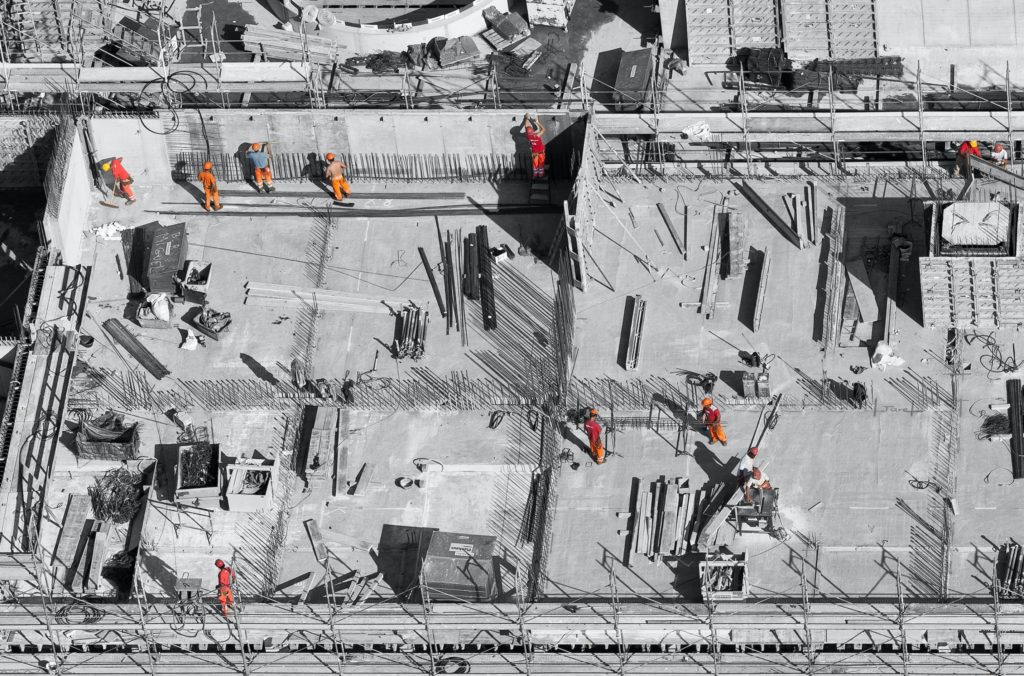
Early Engagement
Project A has a need for a security-rated fencing system that offers a 3 min minimum delay against attack. They want the system to be cost-effective through savings on materials and installation. They expect the fencing system to be designed, manufactured, and supplied within a set time frame due to site security requirements.
Project A team puts out an open call to all fencing manufacturing companies to present their solutions with added additional value. They conduct an open day where they learn the following:
- There are multiple solutions in the marketplace.
- Some solutions are double skins and some solutions are single skin, they can demonstrate quicker installation from a single skin system which reduces overall project costs. They discover that the fencing system needs to be LPS 1175 B3 (SR2) to deliver the required security rating.
- By using a standard industry height they can remove excessive design work and material waste in the manufacturing process so reducing the embodied carbon on the system as well as reducing the lead time for manufacturing.
- They discover that as there are multiple systems they can maintain competitiveness which can drive cost efficiencies in the project.
- Through early engagement they are able to prime the manufacturers for the scale, scope, and time frames required for the project. With the early selection of the system, they are also able to vest the manufacturing materials to hold the price of the raw materials and manufacturing costs.
- They are able to discuss standard widths for their ingress and egress solutions so that they can use ‘stock’ widths that require less design time and speed up the manufacturing process.
- Project A team feels that they have a solution that matches their needs, wants, and expectations as well as delivering added additional value to the project.

Without Early Engagement
Project B has a need for a security-rated fencing system that offers a 3 min minimum delay against attack. They want the system to be cost-effective through savings on materials and installation. They expect the fencing system to be designed, manufactured, and supplied within a set time frame due to site security requirements.
Project B team decides against any early engagement and decides to work on the project alone, leaving it to the subcontractor when appointed to deliver the required security-rated fencing system on a supply and install price. Project B sets a price per linear metre (PLM) as a budget cost based on current prices in the marketplace and selects fencing heights and gate widths based on what they think they need.
Project B team discovers the following when it comes time for the fencing system to be installed.
- They have one solution that is offered to them by the subcontractor
- The price they budgeted for the project no longer covers the rising costs in material prices and the fencing and gates are now over budget.
- The height of the fencing system was nonstandard and resulted in more manufacturing waste in its production which has increased the embodied carbon as fencing panels needed to be cut down to size for the project.
- Due to nonstandard heights and widths, excess design time was required across the fencing and gate systems which resulted in a longer lead time for design and manufacturing. This has had an impact on the timeline for the project.
- Project B has delivered the needs for the project but has not delivered added additional value and is unsure if the ‘best’ solution has been used. They have paid more for the solution than Project A team
Both of these are actually real-world examples of projects that Zaun has seen over the last 26 years as the last British in-house manufacturer of woven and welded mesh fencing systems. However, Project A has tended to be Public Sector Projects, Utilities, and Frameworks whereas Project B has always centered on Private Sector projects.
The private sector construction playbook outlines the following for market engagement:
Engaging with the construction supply chain ahead of a formal procurement process enables clients and contractors to plan and allocate resources, and lets suppliers become familiar with the project.
Ask the supply chain as soon as possible about the mechanics of the procurement process, how the works should be taken to market, and buildability, logistics, material availability, and programming. Involvement of the supply chain in this way will provide technical and specialist design input at the earliest stage of the project and encourage innovation.
Likewise, it allows the project team to ask key questions to assess the capability of the supply chain, such as:
- Does the supplier/manufacturer have a proven track record and ability to manage the nature and risk profile of the project?
- Does the supplier/manufacturer have the capacity as a business to take on a specific project?
You can read the full document here – https://media.bethebusiness.com/documents/5195_Construction_Brochure_SinglePgs.pdf
So how will you work with the supply chain moving forwards? With you be Project A or Project B?

The post The Private Sector Construction Playbook : Trust and Productivity appeared first on Zaun Limited.
]]>