The post Silent Fronts: Grey Zone Warfare and the Protection of Europe’s Critical Infrastructure appeared first on Zaun Limited.
]]>Recent attacks on the Polish rail network and growing pressure on power grids show how grey zone tactics have moved from theory into daily reality. They also demonstrate the continuing importance of physical protection for critical sites.
Understanding Grey Zone Warfare
Grey zone operations include sabotage, cyber intrusion, misinformation and low level physical interference. The objective is simple. Increase the cost of defence, delay logistics, damage confidence and test political cohesion. These attacks offer plausible deniability and reduce the risk of escalation.
Operators of national infrastructure are now confronting a threat landscape that is both ambiguous and persistent.
Case Study: Attacks on Poland’s Rail System
In late 2025 the Polish government confirmed an explosion on a key railway line frequently used for transport to Ukraine. Previous incidents included deliberate track interference, targeted infrastructure damage and radio attacks that sent unauthorised emergency stop signals to multiple trains.
These events share common characteristics. They target high value logistics routes. They exploit older systems with weak communication security. They focus on areas where physical protection is limited. Attribution is still ongoing but analysts continue to connect these disruptions to hostile state activity.
Pressure on Power Grids and Energy Networks
Power grids across NATO’s eastern flank have also faced increasing levels of interference and attempted intrusion. From drone flyovers to attempts to access substations, operators have been compelled to strengthen their sites with new protective compounds, anti drone measures and rapid detection systems.
Energy networks are attractive targets because a single point of failure can create national level disruption.
Why Physical Security Matters
Grey zone attacks often rely on speed, access and concealment. Upgrading physical security disrupts all three. Strong perimeter protection is a force multiplier for both detection and response.
Below are the main ways that fencing and secured compounds help protect infrastructure.
1. Delaying and Denying Access
High security fencing systems, including LPS 1175 certified products, create meaningful delay. Attackers must commit time, tools and noise which increases the chances of detection. For rail hubs, substations and fuel depots this delay can be the difference between a protected asset and a successful act of sabotage.
2. Creating Clear Boundaries
Many legacy sites have weak or unclear boundaries. Upgraded fencing creates a defined perimeter that supports CCTV, PIDs, patrol routes and access control. Clear borders remove ambiguity and make intrusion easier to detect.
3. Resistance to Basic Tools
Grey zone saboteurs often use basic equipment such as bolt cutters, pry bars or lightweight explosives. Mesh systems with certified cut resistance, anti-climb geometry and tamper-resistant fixings dramatically reduce the success of these tactics.
4. Integration With Security Technology
Modern perimeter protection is designed to integrate with electronic systems. This includes sensors, fibre detection, microwave barriers and automated alarms. A fence line becomes an active detection asset rather than a passive barrier.
5. Supporting Redundancy and Resilience
Physical protection remains essential even when cyber systems are compromised. Strong perimeters prevent unauthorised access to control cabinets, switching systems and trackside equipment.

A Growing European Pattern
Europe has seen a rise in attacks on rail signalling, energy infrastructure, maritime cables and logistical corridors. Many of these incidents remain unattributed. What is clear is that physical intrusion opportunities play a major role in enabling them.
The Path Forward
Grey zone activity is not a temporary trend. It will remain a feature of European security for years. While governments continue to improve cyber defence, physical protection must not be neglected. Perimeter security is often the first and most reliable line of defence.
Upgrading fencing, access control and detection capability is a cost effective and practical way to reduce risk. When a site is protected by certified systems, the attacker’s timeline is disrupted, detection thresholds are lowered and the likelihood of success drops sharply.
Conclusion
The attacks in Poland and the broader pressure across Europe illustrate the urgent need to strengthen both physical and technological defences. Grey zone warfare relies on exploiting gaps. Strong fencing, secure boundaries and integrated detection systems close many of those gaps.
For critical national infrastructure, effective perimeter protection is no longer optional. It is essential for resilience, continuity and national stability.
The post Silent Fronts: Grey Zone Warfare and the Protection of Europe’s Critical Infrastructure appeared first on Zaun Limited.
]]>The post Who’s Really Protecting Your Perimeter? appeared first on Zaun Limited.
]]>Why weld strength matters more than just wire gauge
In the world of 358 mesh fencing, not all panels are created equal. Many companies market panels by quoting wire thickness such as 3.9 mm, 4.0 mm, etc. But that metric alone doesn’t tell the full story.
We recently carried out a series of destruction tests on three 358 panels to compare real-world performance. The results show why relying on wire thickness alone can leave your perimeter exposed. We chose 358 as it is often seen as a High Security Fencing system and therefore a safe panel for many projects such as schools, transport and logistics, and commercial projects.
The Test Setup & Results

| Panel | Origin | Wire Diameter (mm) | Failure Load | % of Wire Tensile | Result |
|---|---|---|---|---|---|
| Panel 1 | UK | 3.96 – 3.99 | 4.9 kN | ~75% |  PASS PASS |
| Panel 2 | Turkey | 3.76 – 3.77 | 2.4 kN | 36.64% |  FAIL FAIL |
| Panel 3 | China | 3.86 – 3.90 | 0.8 kN | 12.21% | FAIL |
Panels 2 and 3 are currently being sold into the UK market, despite failing at less than half, and in one case less than one-sixth, of the strength of the UK-manufactured panel. How do we know? Because the manufacturers approached us directly and sent these very samples as their best examples. They even told us which UK fencing companies they already supply.
“These weren’t random imports. The manufacturers sent us these samples as their best panels to prove quality. They still failed.”

Why Weld Strength Is the Real Gatekeeper
“A mesh fence is only as strong as its weakest weld.”
1. The weakness is at the joints
In a mesh panel, the points where wires cross are welded. If those welds are poorly made, for example under-penetrated, porous, or inconsistent, they will fail well before the wire itself breaks. This is exactly what we saw in Panels 2 and 3.
2. Wire thickness ≠ panel strength
Thicker wire alone doesn’t always guarantee security. In our test, the Chinese panel used almost the same wire size as the UK panel, but it still failed at just 0.8 kN. The reason, its welds could not sustain the load.
3. Real-world loads demand reliable welds
From crowd loading to climbing attempts, fences experience repeated stresses and sudden impacts. If welds crack or shear under these loads, the perimeter is compromised. International standards specify testing because weld quality is mission-critical.
4. Quality control makes the difference
Strong panels require not just the right design, but also rigorous inspection and destructive sampling. That’s what ensures every batch performs consistently, not just on paper.
What to Ask Your Supplier
- Weld shear test data – not just wire diameter.
- Batch quality control – how often are destructive tests run?
- Standards compliance – do they meet BS 1722 requirements?
Watch the Test for Yourself
It is not the size of the wire that keeps a site secure, it is the strength of the weld. In our tests, the UK panel withstood more than double the destructive load of the Turkish panel, and over six times that of the Chinese panel.
The Turkish panel had the thinnest wire (average 3.765 mm), around 5.3% thinner than the UK panel (average 3.975 mm). It performed better than the Chinese panel (average 3.88 mm), but still failed at less than 40% of the overall tensile strength. The Chinese panel failed at less than 13% of the overall tensile strength. The UK panel passed at 4.9 kN, equal to 75% of the tensile strength.
You can see the results for yourself in the video below:
Final Word
Don’t be misled by numbers on a datasheet. A panel can look the same and feel the same but when tested, weak welds fail well before the wire does.
If you’re responsible for protecting a perimeter, insist on weld test data, not just wire thickness. It is the welds that stand between a secure site and a serious breach.
We invite you to visit our mesh manufacturing facility and see a destruction test in person. Contact us today to arrange your visit.
The post Who’s Really Protecting Your Perimeter? appeared first on Zaun Limited.
]]>The post Airport Security – Driving Innovation in decarbonising physical perimeter security appeared first on Zaun Limited.
]]>The event and factory tour were arranged by The Black Country Chamber of Commerce to allow Heathrow to meet one of their supply chain members in the form of Zaun. Heathrow spends almost £100m every year in the West Midlands via their supply chain. Nigel was able to see how Zaun has been innovating and decarbonising physical perimeter security fencing and gate systems that are deployed at Heathrow.
From all electric Forklift trucks to a 330mw Solar Array and British Manufacturing, Zaun were able to share part of their journey to ‘greener security’. Nigel Milton said, “Heathrow relies on SMEs up and down the country, and it is fantastic to come out and meet with the companies that keep the UK’s hub airport flowing.”

The tour was hosted by Alastair Henman (Founder and Managing Director), Jack McGinty (Operations Director), and Steve Bailes (Business Development Manager) for Zaun. (Pictured left to right – Gail Arnold (Black Country Chamber of Commerce), Steve Bailes (Zaun), Alastair Henman (Zaun), Jack McGinty (front- Zaun), Dave Goss (back – Fernden Construction), Sarah Ralphs (Heathrow), Paul Bovington (Fernden Construction), Nigel Milton (Heathrow)


The post Airport Security – Driving Innovation in decarbonising physical perimeter security appeared first on Zaun Limited.
]]>The post Perforated Fencing and Gates: A Secure and Stylish Upgrade appeared first on Zaun Limited.
]]>Safety and Security with Perforated Fencing
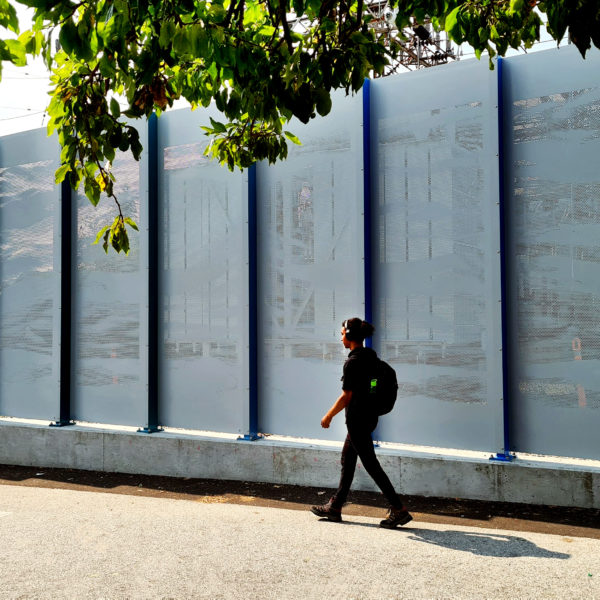
Safety is a top concern for specifiers and fencing contractors. Traditional laser-cut fencing poses a risk due to sharp edges. Picture-perf fencing eliminates this hazard with its perforation process. This method creates intricate designs without compromising the metal’s integrity, resulting in a smooth, safe surface for everyone around the fence or gate.
Unmatched Strength and Durability for Long-Term Protection
Specifiers require fencing solutions that can withstand the elements and resist physical challenges. Picture-perf fencing by Zaun delivers exceptional strength and durability. The perforation process removes minimal material, preserving the structural integrity of the fencing. This stands in stark contrast to laser-cut fencing, which weakens the metal by removing sections. Consequently, picture-perf fencing offers superior resistance to impact, vandalism, and harsh weather conditions, making it a reliable long-term security solution.
Beyond Security: Unleash Your Design Potential with Perforated Fencing and Gates
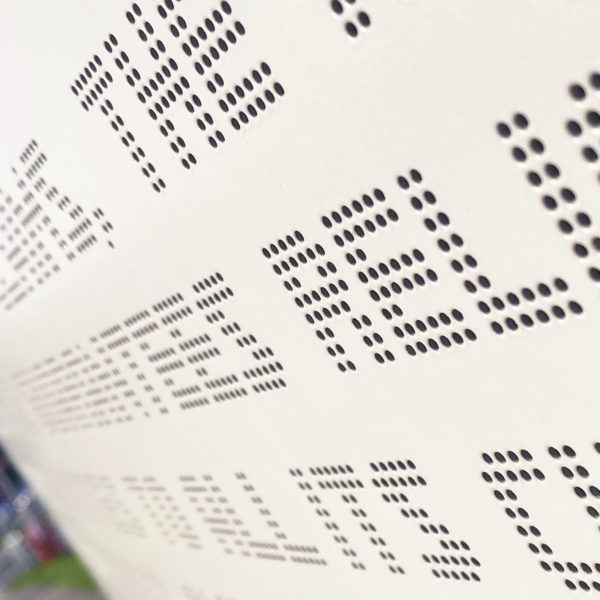
While safety and durability are crucial, specifiers often seek fencing solutions that complement a project’s aesthetics. Picture-perf fencing by Zaun surpasses expectations in this regard. The perforating technology facilitates the creation of a vast range of designs, from intricate geometric patterns to photorealistic images. This allows for seamless integration of the fencing or gate into the project’s design, transforming it from a functional necessity into a visually striking element.

Applications for Perforated Fencing and Gates
The versatility of picture-perf fencing makes it suitable for a wide range of applications, including:
- Schools and Playgrounds: The safety features and ability to incorporate colorful designs or mascots make picture-perf fencing ideal for securing schools and playgrounds.
- Public Buildings and Spaces: Perforated fencing with intricate patterns or building logos can elevate the visual appeal of public areas.
- Commercial Properties: Businesses can leverage picture-perf fencing to enhance their brand image by incorporating logos or other design elements.
Beyond Traditional Applications: Perforated Fencing for Unique Needs
- Zoos and Wildlife Parks: Picture-perf fencing can be incorporated as hero panels within existing fencing systems, showcasing the animals directly on the fencing!
- Healthcare and Hospitals: With perforations less than 8mm, picture-perf fencing offers zero finger traps, making it ideal for seclusion gardens or hospital garden screening.
The Future of Fencing is Perforated
Zaun’s picture-perf fencing and gates represent a significant advancement in fencing technology. By prioritizing safety, durability, and aesthetics, this innovative product offers a solution that surpasses the limitations of traditional laser-cut fencing. With its limitless design potential and superior functionality, picture-perf fencing is poised to redefine expectations for fencing applications across the UK and Europe.
The post Perforated Fencing and Gates: A Secure and Stylish Upgrade appeared first on Zaun Limited.
]]>The post Let’s Talk – HiSec Super 10 appeared first on Zaun Limited.
]]>The ability to offer protection through innovation has always been at the heart of all our product designs and HiSec Super 10 is no different. The world’s first single skin fencing system rated to LPS 1175 B3 (SR2) and Secured by Design was designed in January 2013, since then it has gone on to protect projects and assets around the globe. So let’s talk a little more about HiSec Super 10.
The secret is in the Verticals
Maybe we shouldn’t tell you this but the secret to our HiSec Super 10 is in the vertical wires on the fencing panel. Manufactured at our factory in the West Midlands on our own in-house rigid mesh machine, 10mm hot rolled then cold drawn coil is straightened and cut into lengths matching the height of the fence. These wires are then electro-welded to the horizontal 4mm wires to form the 358 mesh design.
These 10mm vertical wires form the backbone of the panel, delaying any form of attack by a would-be intruder using toolset B from Issue 8 of LPS 1175. This includes attack tools such as bolt cutters, drills, hammers, hacksaws and cutting pliers.
But what about the single skin
Well, that too is down to the 10mm vertical wires. With the added delay from a 10mm vertical wire at 76.2mm wire centres across the width of the panel, the need for another panel or any additional clamp bars and hardware to delay an attacker is obsolete. Not only does this help reduce the cost of protection in manufacturing but can also help to reduce installation costs on site.
Installation is at least 30% quicker than similar double-skin B3 (SR2) fencing systems in the marketplace because only one panel needs to be installed. The single-panel design also offers greater visibility and aesthetics as it allows ease of sight for CCTV and other detection systems which can be mounted to the rear of the panel.
Well that all sounds great but anything else
Actually yes, by manufacturing all the components ourselves HiSec Super 10 benefits from a lower embodied carbon than other systems. Our rigid mesh machine is run entirely by our solar panels that produce more electricity than we use so we are net positive on our electrical use during spring, summer and autumn. By bringing all the materials into the factory we are removing a major carbon footprint from the manufacturing chain in the form of onward transport to others of a separate panel as we supply the entire fencing system directly to our customers straight from our own manufacturing which reduces the carbon miles of the fencing system.
HiSec Super 10 is a Made in Britain fencing system that helps to support and generate social value through the employment of a local workforce that adds wider financial and nonfinancial value back into the area creating social capital. By specifying and using HiSec Super 10 on your projects you are helping to promote UK manufacturing, greener construction products and raising security to a tested and approved standard.
The post Let’s Talk – HiSec Super 10 appeared first on Zaun Limited.
]]>The post Physical Security Failures close both Berlin and Munich Airport appeared first on Zaun Limited.
]]>We were on the tarmac at Berlin and Munich #airports addressing the causes of climate change.
With fossil fuel subsidies for aviation, it would be easy to make local transport affordable.The police were informed in advance. There is no danger from us – but from #DeadlyPolitics! pic.twitter.com/KdZ9skrRlx
— Letzte Generation (@AufstandLastGen) December 8, 2022
On 26th November a group of six activists cut through the physical perimeter of BER Berlin Brandenburg Airport to gain access to the taxiways. In the 16 minutes that they had uninterrupted access before the Federal Police arrived, they managed to glue themselves to the tarmac. Their actions resulted in fifteen incoming flights being rerouted and five others grounded.
Two weeks later on 8th December, the same group carried out an identical intrusion into MUC Munich International Airport and again at BER. Gaining access again by ‘cutting through’ the active perimeter fence line allowed them to superglue their hands to not only taxiways but one of the active runways. Last Generation claims to have informed the Federal Police about their plans and documented the protest across multiple social media channels.
View this post on Instagram
In both incursions, the airport’s physical perimeter and detection systems failed to protect the airport from unauthorised access. Standard chain link fencing had been installed with barbed wire hostile security topping to prevent scaling. The threat from cut-through appears to have not been considered and so the adoption of tested and certified fencing systems such as LPS 1175, Secured by Design, or fencing ‘Approved for Government Use – CPNI’ seems to have been discounted in the threat analysis.
Zaun has worked with a number of major airports to secure their perimeters against attacks over the years. With this ‘proven’ disruption seeming to work in Germany, is it now time for other airports to readdress the threats to their estate from climate protesters?
The post Physical Security Failures close both Berlin and Munich Airport appeared first on Zaun Limited.
]]>The post The Future of Physical Security appeared first on Zaun Limited.
]]>Critical National Infrastructure (CNI)
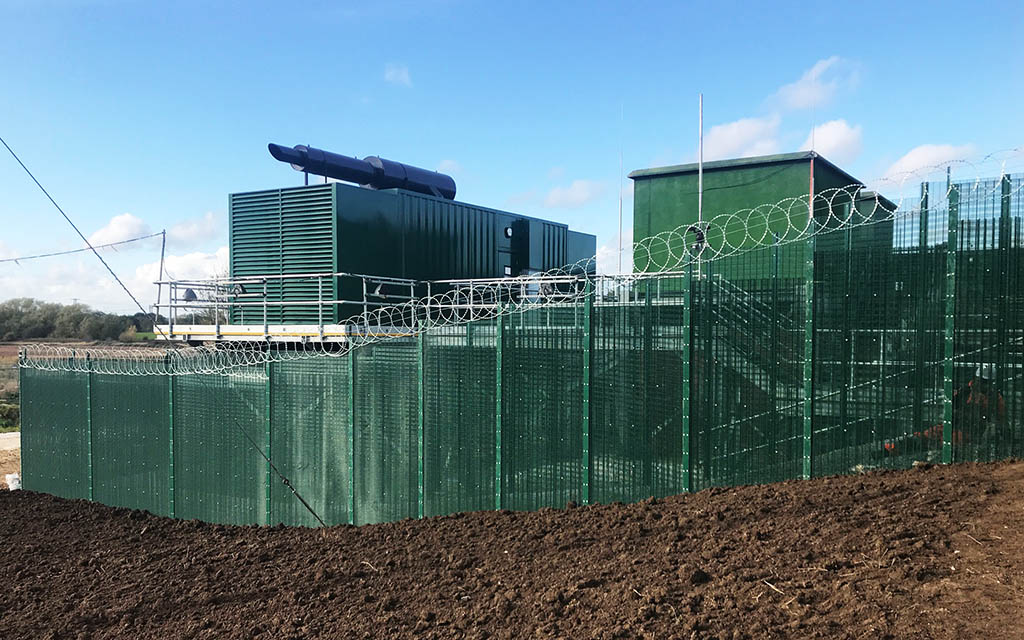
From railways to pipe-lines and utilities, the protection of Critical National Infrastructure has always been at the heart of the United Kingdom’s response to physical security. Analysis of the latest threat from crime and ‘State-sponsored Terrorism’ has led to the continued development of new physical security solutions. Enabling a handful of products to hold a revered space in the Catalogue of Security Equipment (CSE) proving that they have obtained the highest level of protection against physical attacks in the UK and are approved for UK Government Use – Contact CPNI for further information.
The United Kingdom has long been regarded as the pinnacle of physical security innovation and risk mitigation. In part due to protecting against ‘domestic terrorism’ across Northern Ireland and mainland Britain, ‘religious fanaticism,’ and elevated levels of ‘guerrilla’ demonstrations and protesting concerning the impact of climate change on the planet in recent years. This had led to a constant evolution of physical security products to combat the challenges of an ever-changing threat landscape.
However, the adoption of these physical security products to combat risk in other countries around the world varies greatly. German rail operator Deutsche Bahn recently reported that key communication cables at two locations had been damaged through ‘intentional interference’. The locations, one outside Berlin and another in the western state of North Rhine-Westphalia have led authorities “to assume intentional acts” were behind the rail disruption as cables were severed at two locations.
This failure of physical security to deter, detect and delay ‘saboteurs’ to give the authorities time to respond, resulted in Deutsche Bahn having to stop trains running in the north for three hours removing a piece of Critical National Infrastructure from the country. This ‘act of sabotage’ happened only weeks after ‘attacks’ on Nord Stream 1 and 2 in the Baltic Sea, which saw explosions occur in the vicinity of the pipelines with experts saying, “the scale of the damage and the fact that the leaks are far from each other on two different pipelines indicate that the act was intentional and well-orchestrated”.
As we look to the future, the protection of Critical National Infrastructure will require a suite of physical security solutions to be deployed. The adoption of a globally tested and certified security standard needs to be a driving factor in supporting the correct physical security being used at the right time and in the right place. In 2019, the Loss Prevention and Certification Board (LPCB) took steps to develop a new physical security standard that no longer thought in a linear view. The LPS 1175 Issue 8 promotes “deter, detection, and delay” at its core but recognises that you may have to defend against attack tools such as the latest 54v cordless work tools for a reduced time to the old SR7 attack time of 10 minutes.
Offering the ability to be evaluated and certified to G1, G3, or G5 for example, enables the testing of the right tools for the right amount of delay on new physical security products. This opens the future of physical security by allowing the security consultants to have a wealth of new systems and solutions that previously would have been classed as having failed the 10-minute test. Building this into the protection of Critical National Infrastructure will be the deciding line between a protected site and one that is vulnerable to attack. manufacturers, security consultants, and clients need to work together to know what threats are and for how long they need to protect against them, so that physical security can stand the test of time and continue to be the best defence against attacks.
Data

If knowledge is king, then data theft is stealing the crown jewels. In 2022 there were 97 zettabytes of data created, captured, copied, and consumed worldwide, by 2025 this is expected to almost double to 181 zettabytes. If we consider that one zettabyte is the equivalent of 1,099,511,627,776 gigabytes, the implication of how much data must be secured is terrifying. A 1GB SD card, can store up to 30 hours of digitally compressed music, more than 320 minutes of MPEG-4 compressed video or more than one thousand high-resolution digital images.
To store this increase in ‘cloud’ data, we will still require the creation of new physical data centres. At the end of 2021, there were 728 hyperscale data centres in operation globally; by 2026 this is expected to be over 1200. Not only is the number of these facilities growing but so is their capacity. “As the installed base of operational data centres continues to grow each year at double-digit percentage rates, the capacity of those data centres will grow even more rapidly as the average size increases and older facilities are expanded.”
The protection of data has often been seen as a cyber security issue rather than a physical security one. However, in the Verizon 2022 Data Breach Investigations Report, 82% of breaches involved the Human Element, including social attacks, errors, and misuse. This places the continued reliance on physical security at the forefront of the future of data security.
Data centres not only have to defend the cyber landscape they must defend the physical one as well. The latest in multi-threat protection for physical security needs to be deployed to offer both Hostile Vehicle Mitigation and delay against forced entry at the same point. Higher and higher levels of physical security are being deployed to deter attacks, and when attacked offer longer levels of delay so a physical response can be deployed.
The risk of wholesale data loss means that the future of physical security will continue to be a cornerstone requiring the latest innovations to protect the almost double zettabytes in the coming years. We are starting to see this now, and the market will only continue to grow in the future.
Cost of Living
With reports of a global recession ringing loud across the mainstream media, will physical security play a part in the protection of the economy? Thankfully, the fear of increased crime during a recession is seen as a paradox.
Dr Siddhartha Bandyopadhyay, Senior lecturer in Economics, Department of Economics, University of Birmingham said “Socio-economic factors of course matter but their impact on crime is more complex. Unemployment may increase crime as unemployed people often have fewer options, but unemployment is also accompanied by people spending less which means there is less to steal. Further, with more people at home rather than at work, the property is left unguarded less often making it more difficult to steal. Average earnings also have an ambiguous effect on crime. Increased earnings suggest people do not need to steal but at the same time, it also implies greater spending on goods that can become targets for theft. Hence, the combined effect of unemployment and depressed wages may paradoxically reduce crime.”
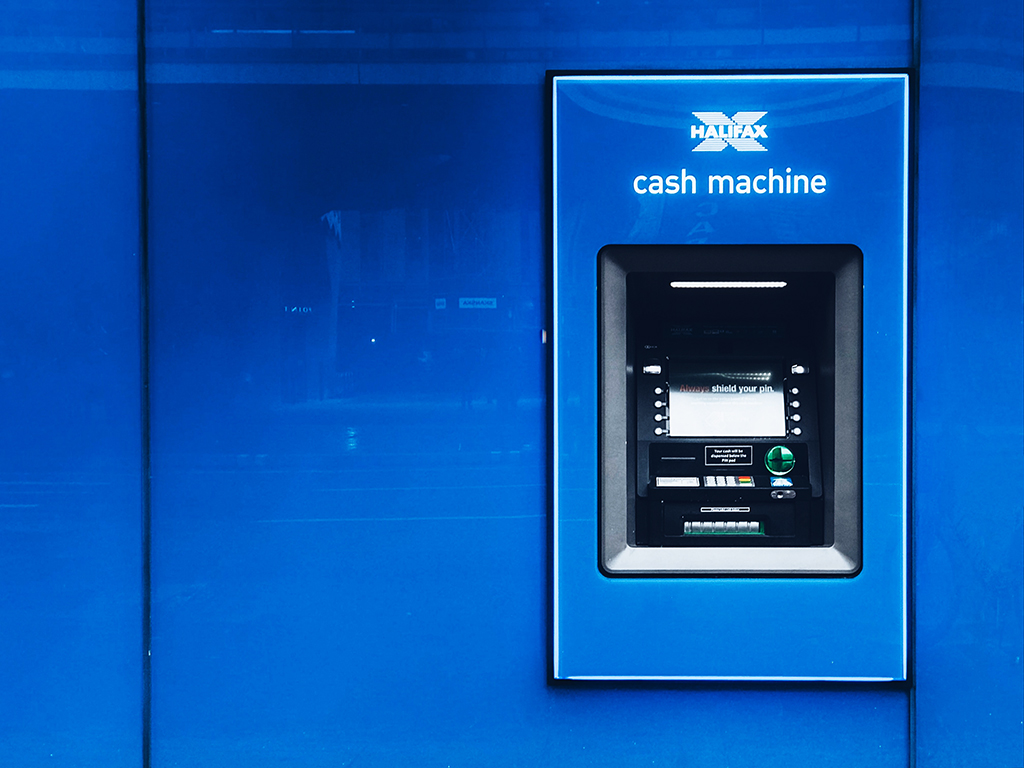
However, the rise in organised crime against businesses rather than persons seems to be on the increase. Crime such as ram-raiding has been increasing in recent months as the cost-of-living crisis seems to deepen. Detective Chief Inspector Chris O’Brien (Cambridgeshire Police) said, “the intelligence we have, we believe ATM thefts are likely to increase in the coming months and are therefore launching a pro-active policing response.”
During COVID-19 Pandemic the use of physical cash dropped, however with the cost-of-living crisis a resurgence in physical cash has begun, meaning that ATMs must store more in them. The Post Office, which has 2,700 ATM locations across the country, said its branches oversaw a record £801m (€948m) in cash withdrawals in July. That is up almost 8% compared to June and 20% from the same period last year.
With an increase in cash held and reports that police expect more ram-raids over the coming months the use of physical security such as HVM solutions is a key aspect of protecting the economy. Removing the ability of a vehicle to ‘attack’ the machine deters robberies at rural locations. But ATM theft is not the only area we must look at to see the future of physical security during a cost-of-living crisis.
Distribution, warehouses, and logistic centres now hold more stock than ever before making them ideal targets for criminal gangs. Supply chain disruptions caused by the pandemic, the war in Ukraine, and the Suez Canal blockage in 2021 have left global companies scrambling to find warehouse space closer to their home markets. These warehouses need to be able to protect against the threat of theft.
In recent years, a move from the cheapest physical security products to higher security-rated solutions has resonated across the industry. Whereas once standard V-Mesh fencing systems may have surrounded these massive sites, now LPS 1175 A1 fencing systems are the common go-to system of choice for the companies and insurance companies underwriting the development.
As the situation evolves, the new norm will continue to play a major part in the future of physical security as further developments must not be seen to be weaker than existing ones.
Conclusion
Whilst only scratching the surface of the future of physical security, it can be seen to combat future threats and growing demand, innovations and new ways of working will be required. From a collective point, early engagement between clients, security consultants, emergency services, installers, and manufacturers can create a landscape that can deal with the latest threats.
Being able to combat threats at their inception offers a higher level of future safety and security. The sharing of information and lessons learned should not be restricted to post-incidents but used in the planning and development of the future of physical security. Working with best practices that are constantly reviewed and feeding back the latest challenges will enable an innovative and bright future for physical security.
The post The Future of Physical Security appeared first on Zaun Limited.
]]>The post What are the key dangers to data centre security? appeared first on Zaun Limited.
]]>But just what dangers might these be?
Broken or non-existent security fencing
Any data centre which does not have security fencing at all is taking a real gamble. Installing fencing like this has so many benefits – from the psychological deterrent, it offers to the physical barrier it poses to intruders. It also shows would-be trespassers that you take security seriously. If you do not have perimeter fencing in place, then the opposite message is sent out, and intruders can access your site all too easily. Even if you do have this type of fencing, broken sections can render it ineffective. If you notice any damaged sections of fencing, make sure to get them repaired asap. If this will take some time, it is worth considering temporary fencing to cover the gap in your defences.
Open windows and unlocked doors
One common security danger for any data centre is only focusing on cyber-security. This can see staff forget about physically securing buildings that house IT hardware. If criminals could physically get into these buildings and make off with servers or hard drives, the consequences could be disastrous. Open windows in unoccupied rooms is a widely seen danger, as are doors that get left unlocked. It can also be worth investing in a key-card style system for building access. These can be harder to breach than standard door locks, and so offer extra protection.
Poor lighting on site
Another quite common danger you find for security in data centres is inadequate lighting on-site. Criminals generally prefer to work in the shadows and take cover in poorly lit spaces. This allows them to move about undetected and make it tough to get a clear image of them on CCTV systems. It is therefore sensible to make sure your site is properly lit with motion sensor floodlights.
High-security fencing with Zaun
At Zaun, we know the key role data centres play in the business landscape and how essential securing them is. Our range of high-security perimeter fencing is ideal for this and can help keep out unauthorised intruders. Contact us today on 01902 796699 for more information.
The post What are the key dangers to data centre security? appeared first on Zaun Limited.
]]>The post 4 Reasons to Use A Bike Locker for Train Stations appeared first on Zaun Limited.
]]>Security
The most obvious advantage of using the bike lockers on-site at wherever your bike ride finishes are down to the high-security nature. Stronger and more secure than your average bike lock or chain, you can have peace of mind about your bike’s whereabouts as you continue your day.
Speed up your commute
If you take the train to work, that walk from your home to the station can often feel like a slog – especially first thing in the morning. Bike lockers can help with that part of your day, offering you the chance to cycle from your house to the station, speeding up your overall commute.
Less hassle on the train
If you don’t need your bicycle on the other end of your commute, a secure bike locker will save you all the hassle of boarding a train with your bike. Forget about finding the right carriage and navigating a busy station with your pushbike by leaving it within the safe security fencing of a bike locker before you even step on the platform.
No need for bike locks
As much as well love and rely on our bike locks, using on-site bike lockers saves the hassle of carrying them everywhere. Better still, you can say goodbye to trawling the streets looking for space to lock up your bike amongst all the others. Having your own bike locker for the day keeps your bike safe and your mind at ease.
Looking for a bike locker for train stations? Contact Zaun today!
The post 4 Reasons to Use A Bike Locker for Train Stations appeared first on Zaun Limited.
]]>The post 4 of the best uses for mesh fencing appeared first on Zaun Limited.
]]>1. Security
Mesh fencing is commonly used as a perimeter wall or security fence. It can offer security purposes to residential, industrial or commercial properties. Mesh is also a popular choice for securing homes, however, this is often combined with a form of fencing that is generally considered more aesthetic. For increased security, some people choose a type of mesh fencing that prevents finger holds or tools being able to cut through, due to the extremely small openings.
2. Public Parks
As mesh fences can be installed in various different colours, some people enjoy the look of it in their local parks. For those who are passionate about plants, a mesh fence is a good alternative to wires for plants that climb, as they can easily take the weight without having to be regularly repaired, unlike the alternative.
3. Animals
Mesh fencing is a popular choice for fencing in animals, no matter what they are. As it’s possible to purchase the fence with different sizes of holes, it can accommodate any form or size of the animal. Some of the most common options are horse fencing, rabbit fencing and chicken coops. It is also an extremely safe option for animals, due to the lack of sharp edges.
4. Highways and railways
One of the main industrial uses of mesh fencing is on highways and railways for security purposes. They are extremely beneficial for preventing damage of the tracks, and also to prohibit animals from crossing over dangerous areas.
To shop our range of premium mesh fencing, don’t hesitate to visit our website, or contact us at Zaun for information and guidance.
The post 4 of the best uses for mesh fencing appeared first on Zaun Limited.
]]>