Security Archives - Zaun Limited
https://www.zaun.co.uk/news/category/security/
Protection Thorugh InnovationThu, 20 Nov 2025 14:00:28 +0000en-GB
hourly
1 https://wordpress.org/?v=6.9https://www.zaun.co.uk/media/2023/01/Zaun-Logo-2022-RGB-web-150x150.jpgSecurity Archives - Zaun Limited
https://www.zaun.co.uk/news/category/security/
3232Silent Fronts: Grey Zone Warfare and the Protection of Europe’s Critical Infrastructure
https://www.zaun.co.uk/blog/grey-zone-warfare-and-the-protection-of-europes-critical-infrastructure/
Thu, 20 Nov 2025 14:00:27 +0000https://www.zaun.co.uk/?post_type=blog&p=39219Grey zone warfare is now a defining security challenge in Europe. These are deliberate activities that fall below the threshold of open conflict but still aim to disrupt, destabilise and weaken. They create uncertainty, exploit vulnerabilities and force governments to react without clear attribution. Recent attacks on the Polish rail network and growing pressure on...
]]>Grey zone warfare is now a defining security challenge in Europe. These are deliberate activities that fall below the threshold of open conflict but still aim to disrupt, destabilise and weaken. They create uncertainty, exploit vulnerabilities and force governments to react without clear attribution.
Recent attacks on the Polish rail network and growing pressure on power grids show how grey zone tactics have moved from theory into daily reality. They also demonstrate the continuing importance of physical protection for critical sites.
Understanding Grey Zone Warfare
Grey zone operations include sabotage, cyber intrusion, misinformation and low level physical interference. The objective is simple. Increase the cost of defence, delay logistics, damage confidence and test political cohesion. These attacks offer plausible deniability and reduce the risk of escalation.
Operators of national infrastructure are now confronting a threat landscape that is both ambiguous and persistent.
Case Study: Attacks on Poland’s Rail System
In late 2025 the Polish government confirmed an explosion on a key railway line frequently used for transport to Ukraine. Previous incidents included deliberate track interference, targeted infrastructure damage and radio attacks that sent unauthorised emergency stop signals to multiple trains.
These events share common characteristics. They target high value logistics routes. They exploit older systems with weak communication security. They focus on areas where physical protection is limited. Attribution is still ongoing but analysts continue to connect these disruptions to hostile state activity.
Pressure on Power Grids and Energy Networks
Power grids across NATO’s eastern flank have also faced increasing levels of interference and attempted intrusion. From drone flyovers to attempts to access substations, operators have been compelled to strengthen their sites with new protective compounds, anti drone measures and rapid detection systems.
Energy networks are attractive targets because a single point of failure can create national level disruption.
Why Physical Security Matters
Grey zone attacks often rely on speed, access and concealment. Upgrading physical security disrupts all three. Strong perimeter protection is a force multiplier for both detection and response.
Below are the main ways that fencing and secured compounds help protect infrastructure.
1. Delaying and Denying Access
High security fencing systems, including LPS 1175 certified products, create meaningful delay. Attackers must commit time, tools and noise which increases the chances of detection. For rail hubs, substations and fuel depots this delay can be the difference between a protected asset and a successful act of sabotage.
2. Creating Clear Boundaries
Many legacy sites have weak or unclear boundaries. Upgraded fencing creates a defined perimeter that supports CCTV, PIDs, patrol routes and access control. Clear borders remove ambiguity and make intrusion easier to detect.
3. Resistance to Basic Tools
Grey zone saboteurs often use basic equipment such as bolt cutters, pry bars or lightweight explosives. Mesh systems with certified cut resistance, anti-climb geometry and tamper-resistant fixings dramatically reduce the success of these tactics.
4. Integration With Security Technology
Modern perimeter protection is designed to integrate with electronic systems. This includes sensors, fibre detection, microwave barriers and automated alarms. A fence line becomes an active detection asset rather than a passive barrier.
5. Supporting Redundancy and Resilience
Physical protection remains essential even when cyber systems are compromised. Strong perimeters prevent unauthorised access to control cabinets, switching systems and trackside equipment.
A Growing European Pattern
Europe has seen a rise in attacks on rail signalling, energy infrastructure, maritime cables and logistical corridors. Many of these incidents remain unattributed. What is clear is that physical intrusion opportunities play a major role in enabling them.
The Path Forward
Grey zone activity is not a temporary trend. It will remain a feature of European security for years. While governments continue to improve cyber defence, physical protection must not be neglected. Perimeter security is often the first and most reliable line of defence.
Upgrading fencing, access control and detection capability is a cost effective and practical way to reduce risk. When a site is protected by certified systems, the attacker’s timeline is disrupted, detection thresholds are lowered and the likelihood of success drops sharply.
Conclusion
The attacks in Poland and the broader pressure across Europe illustrate the urgent need to strengthen both physical and technological defences. Grey zone warfare relies on exploiting gaps. Strong fencing, secure boundaries and integrated detection systems close many of those gaps.
For critical national infrastructure, effective perimeter protection is no longer optional. It is essential for resilience, continuity and national stability.
]]>Who’s Really Protecting Your Perimeter?
https://www.zaun.co.uk/blog/weld-strength-vs-wire-thickness-358-mesh-fencing/
Fri, 26 Sep 2025 07:37:21 +0000https://www.zaun.co.uk/?post_type=blog&p=39124Who’s Really Protecting Your Perimeter? Why weld strength matters more than just wire gauge In the world of 358 mesh fencing, not all panels are created equal. Many companies market panels by quoting wire thickness such as 3.9 mm, 4.0 mm, etc. But that metric alone doesn’t tell the full story. We recently carried out...
Why weld strength matters more than just wire gauge
In the world of 358 mesh fencing, not all panels are created equal. Many companies market panels by quoting wire thickness such as 3.9 mm, 4.0 mm, etc. But that metric alone doesn’t tell the full story.
We recently carried out a series of destruction tests on three 358 panels to compare real-world performance. The results show why relying on wire thickness alone can leave your perimeter exposed. We chose 358 as it is often seen as a High Security Fencing system and therefore a safe panel for many projects such as schools, transport and logistics, and commercial projects.
The Test Setup & Results
Panel
Origin
Wire Diameter (mm)
Failure Load
% of Wire Tensile
Result
Panel 1
UK
3.96 – 3.99
4.9 kN
~75%
PASS
Panel 2
Turkey
3.76 – 3.77
2.4 kN
36.64%
FAIL
Panel 3
China
3.86 – 3.90
0.8 kN
12.21%
FAIL
Panels 2 and 3 are currently being sold into the UK market, despite failing at less than half, and in one case less than one-sixth, of the strength of the UK-manufactured panel. How do we know? Because the manufacturers approached us directly and sent these very samples as their best examples. They even told us which UK fencing companies they already supply.
“These weren’t random imports. The manufacturers sent us these samples as their best panels to prove quality. They still failed.”
Why Weld Strength Is the Real Gatekeeper
“A mesh fence is only as strong as its weakest weld.”
1. The weakness is at the joints
In a mesh panel, the points where wires cross are welded. If those welds are poorly made, for example under-penetrated, porous, or inconsistent, they will fail well before the wire itself breaks. This is exactly what we saw in Panels 2 and 3.
2. Wire thickness ≠ panel strength
Thicker wire alone doesn’t always guarantee security. In our test, the Chinese panel used almost the same wire size as the UK panel, but it still failed at just 0.8 kN. The reason, its welds could not sustain the load.
3. Real-world loads demand reliable welds
From crowd loading to climbing attempts, fences experience repeated stresses and sudden impacts. If welds crack or shear under these loads, the perimeter is compromised. International standards specify testing because weld quality is mission-critical.
4. Quality control makes the difference
Strong panels require not just the right design, but also rigorous inspection and destructive sampling. That’s what ensures every batch performs consistently, not just on paper.
What to Ask Your Supplier
Weld shear test data – not just wire diameter.
Batch quality control – how often are destructive tests run?
Standards compliance – do they meet BS 1722 requirements?
Watch the Test for Yourself
It is not the size of the wire that keeps a site secure, it is the strength of the weld. In our tests, the UK panel withstood more than double the destructive load of the Turkish panel, and over six times that of the Chinese panel.
The Turkish panel had the thinnest wire (average 3.765 mm), around 5.3% thinner than the UK panel (average 3.975 mm). It performed better than the Chinese panel (average 3.88 mm), but still failed at less than 40% of the overall tensile strength. The Chinese panel failed at less than 13% of the overall tensile strength. The UK panel passed at 4.9 kN, equal to 75% of the tensile strength.
You can see the results for yourself in the video below:
Final Word
Don’t be misled by numbers on a datasheet. A panel can look the same and feel the same but when tested, weak welds fail well before the wire does.
If you’re responsible for protecting a perimeter, insist on weld test data, not just wire thickness. It is the welds that stand between a secure site and a serious breach.
We invite you to visit our mesh manufacturing facility and see a destruction test in person. Contact us today to arrange your visit.
]]>Airport Security – Driving Innovation in decarbonising physical perimeter security
https://www.zaun.co.uk/airport-security-driving-innovation-in-decarbonising-physical-perimeter-security/
Wed, 23 Oct 2024 12:58:34 +0000https://www.zaun.co.uk/?p=38708What happens when the United Kingdom’s busiest airport meets the only British in-house manufacturer of woven and welded mesh fencing systems? Well, when Nigel Milton, Chief Communications and Sustainability Officer for Heathrow visited Zaun on Tuesday 15th October he was able to see how Zaun has been driving a sustainable supply chain for physical perimeter...
]]>What happens when the United Kingdom’s busiest airport meets the only British in-house manufacturer of woven and welded mesh fencing systems? Well, when Nigel Milton, Chief Communications and Sustainability Officer for Heathrow visited Zaun on Tuesday 15th October he was able to see how Zaun has been driving a sustainable supply chain for physical perimeter security.
The event and factory tour were arranged by The Black Country Chamber of Commerce to allow Heathrow to meet one of their supply chain members in the form of Zaun. Heathrow spends almost £100m every year in the West Midlands via their supply chain. Nigel was able to see how Zaun has been innovating and decarbonising physical perimeter security fencing and gate systems that are deployed at Heathrow.
From all electric Forklift trucks to a 330mw Solar Array and British Manufacturing, Zaun were able to share part of their journey to ‘greener security’. Nigel Milton said, “Heathrow relies on SMEs up and down the country, and it is fantastic to come out and meet with the companies that keep the UK’s hub airport flowing.”
The tour was hosted by Alastair Henman (Founder and Managing Director), Jack McGinty (Operations Director), and Steve Bailes (Business Development Manager) for Zaun. (Pictured left to right – Gail Arnold (Black Country Chamber of Commerce), Steve Bailes (Zaun), Alastair Henman (Zaun), Jack McGinty (front- Zaun), Dave Goss (back – Fernden Construction), Sarah Ralphs (Heathrow), Paul Bovington (Fernden Construction), Nigel Milton (Heathrow)
]]>Let’s Talk – HiSec Super 10
https://www.zaun.co.uk/lets-talk-hisec-super-10/
Wed, 02 Aug 2023 10:15:28 +0000https://www.zaun.co.uk/?p=37936Single Skin LPS 1175 (B3) SR2 Fencing – Why you should use it? The ability to offer protection through innovation has always been at the heart of all our product designs and HiSec Super 10 is no different. The world’s first single skin fencing system rated to LPS 1175 B3 (SR2) and Secured by Design...
]]>Single Skin LPS 1175 (B3) SR2 Fencing – Why you should use it?
The ability to offer protection through innovation has always been at the heart of all our product designs and HiSec Super 10 is no different. The world’s first single skin fencing system rated to LPS 1175 B3 (SR2) and Secured by Design was designed in January 2013, since then it has gone on to protect projects and assets around the globe. So let’s talk a little more about HiSec Super 10.
The secret is in the Verticals
Maybe we shouldn’t tell you this but the secret to our HiSec Super 10 is in the vertical wires on the fencing panel. Manufactured at our factory in the West Midlands on our own in-house rigid mesh machine, 10mm hot rolled then cold drawn coil is straightened and cut into lengths matching the height of the fence. These wires are then electro-welded to the horizontal 4mm wires to form the 358 mesh design.
These 10mm vertical wires form the backbone of the panel, delaying any form of attack by a would-be intruder using toolset B from Issue 8 of LPS 1175. This includes attack tools such as bolt cutters, drills, hammers, hacksaws and cutting pliers.
But what about the single skin
Well, that too is down to the 10mm vertical wires. With the added delay from a 10mm vertical wire at 76.2mm wire centres across the width of the panel, the need for another panel or any additional clamp bars and hardware to delay an attacker is obsolete. Not only does this help reduce the cost of protection in manufacturing but can also help to reduce installation costs on site.
Installation is at least 30% quicker than similar double-skin B3 (SR2) fencing systems in the marketplace because only one panel needs to be installed. The single-panel design also offers greater visibility and aesthetics as it allows ease of sight for CCTV and other detection systems which can be mounted to the rear of the panel.
Well that all sounds great but anything else
Actually yes, by manufacturing all the components ourselves HiSec Super 10 benefits from a lower embodied carbon than other systems. Our rigid mesh machine is run entirely by our solar panels that produce more electricity than we use so we are net positive on our electrical use during spring, summer and autumn. By bringing all the materials into the factory we are removing a major carbon footprint from the manufacturing chain in the form of onward transport to others of a separate panel as we supply the entire fencing system directly to our customers straight from our own manufacturing which reduces the carbon miles of the fencing system.
HiSec Super 10 is a Made in Britain fencing system that helps to support and generate social value through the employment of a local workforce that adds wider financial and nonfinancial value back into the area creating social capital. By specifying and using HiSec Super 10 on your projects you are helping to promote UK manufacturing, greener construction products and raising security to a tested and approved standard.
]]>Physical Security Failures close both Berlin and Munich Airport
https://www.zaun.co.uk/physical-security-failures-close-both-berlin-and-munich-airport/
Fri, 09 Dec 2022 15:32:33 +0000https://www.zaun.co.uk/?p=37342The United Kingdom has seen its fair share of climate protests over the last 2 years in the form of ‘Just Stop Oil’ and ‘Extinction Rebellion’. However, over in Germany a group called ‘Letzte Generation’ (Last Generation) has upped their protests by attacking the physical perimeter of two major airports to gain access to the...
]]>The United Kingdom has seen its fair share of climate protests over the last 2 years in the form of ‘Just Stop Oil’ and ‘Extinction Rebellion’. However, over in Germany a group called ‘Letzte Generation’ (Last Generation) has upped their protests by attacking the physical perimeter of two major airports to gain access to the high-security areas.
We were on the tarmac at Berlin and Munich #airports addressing the causes of climate change. With fossil fuel subsidies for aviation, it would be easy to make local transport affordable.
On 26th November a group of six activists cut through the physical perimeter of BER Berlin Brandenburg Airport to gain access to the taxiways. In the 16 minutes that they had uninterrupted access before the Federal Police arrived, they managed to glue themselves to the tarmac. Their actions resulted in fifteen incoming flights being rerouted and five others grounded.
Two weeks later on 8th December, the same group carried out an identical intrusion into MUC Munich International Airport and again at BER. Gaining access again by ‘cutting through’ the active perimeter fence line allowed them to superglue their hands to not only taxiways but one of the active runways. Last Generation claims to have informed the Federal Police about their plans and documented the protest across multiple social media channels.
In both incursions, the airport’s physical perimeter and detection systems failed to protect the airport from unauthorised access. Standard chain link fencing had been installed with barbed wire hostile security topping to prevent scaling. The threat from cut-through appears to have not been considered and so the adoption of tested and certified fencing systems such as LPS 1175, Secured by Design, or fencing ‘Approved for Government Use – CPNI’ seems to have been discounted in the threat analysis.
Zaun has worked with a number of major airports to secure their perimeters against attacks over the years. With this ‘proven’ disruption seeming to work in Germany, is it now time for other airports to readdress the threats to their estate from climate protesters?
]]>The Private Sector Construction Playbook : Trust and Productivity
https://www.zaun.co.uk/the-private-sector-construction-playbook-trust-and-productivity/
Thu, 10 Nov 2022 14:11:19 +0000https://www.zaun.co.uk/?p=37301Whilst we may be able to make it, should we really be doing it? With the launch of Trust and Productivity: The private sector construction playbook we wanted to look at some of the key areas raised in the new playbook and how they relate to physical perimeter security and external works. Historically, the UK...
Historically, the UK construction industry has been characterized by a lack of openness, poor productivity, and a failure to invest in innovation. Whilst much progress has been made in addressing the problems, efforts have been focused solely on the public sector. Lessons learned through the supply chain in dealing with these issues help to form part of a new look for the private sector.
One of the biggest lessons learned in terms of physical perimeter security and external works has been the early engagement with the supply chain and the drive to standardisation. Lets us break down why these two areas are so important not just in delivering productivity within the construction process but also in additional value opportunities.
The following example demonstrates the difference between early engagement and without it.
Early Engagement
Project A has a need for a security-rated fencing system that offers a 3 min minimum delay against attack. They want the system to be cost-effective through savings on materials and installation. They expect the fencing system to be designed, manufactured, and supplied within a set time frame due to site security requirements.
Project A team puts out an open call to all fencing manufacturing companies to present their solutions with added additional value. They conduct an open day where they learn the following:
There are multiple solutions in the marketplace.
Some solutions are double skins and some solutions are single skin, they can demonstrate quicker installation from a single skin system which reduces overall project costs. They discover that the fencing system needs to be LPS 1175 B3 (SR2) to deliver the required security rating.
By using a standard industry height they can remove excessive design work and material waste in the manufacturing process so reducing the embodied carbon on the system as well as reducing the lead time for manufacturing.
They discover that as there are multiple systems they can maintain competitiveness which can drive cost efficiencies in the project.
Through early engagement they are able to prime the manufacturers for the scale, scope, and time frames required for the project. With the early selection of the system, they are also able to vest the manufacturing materials to hold the price of the raw materials and manufacturing costs.
They are able to discuss standard widths for their ingress and egress solutions so that they can use ‘stock’ widths that require less design time and speed up the manufacturing process.
Project A team feels that they have a solution that matches their needs, wants, and expectations as well as delivering added additional value to the project.
Without Early Engagement
Project B has a need for a security-rated fencing system that offers a 3 min minimum delay against attack. They want the system to be cost-effective through savings on materials and installation. They expect the fencing system to be designed, manufactured, and supplied within a set time frame due to site security requirements.
Project B team decides against any early engagement and decides to work on the project alone, leaving it to the subcontractor when appointed to deliver the required security-rated fencing system on a supply and install price. Project B sets a price per linear metre (PLM) as a budget cost based on current prices in the marketplace and selects fencing heights and gate widths based on what they think they need.
Project B team discovers the following when it comes time for the fencing system to be installed.
They have one solution that is offered to them by the subcontractor
The price they budgeted for the project no longer covers the rising costs in material prices and the fencing and gates are now over budget.
The height of the fencing system was nonstandard and resulted in more manufacturing waste in its production which has increased the embodied carbon as fencing panels needed to be cut down to size for the project.
Due to nonstandard heights and widths, excess design time was required across the fencing and gate systems which resulted in a longer lead time for design and manufacturing. This has had an impact on the timeline for the project.
Project B has delivered the needs for the project but has not delivered added additional value and is unsure if the ‘best’ solution has been used. They have paid more for the solution than Project A team
Both of these are actually real-world examples of projects that Zaun has seen over the last 26 years as the last British in-house manufacturer of woven and welded mesh fencing systems. However, Project A has tended to be Public Sector Projects, Utilities, and Frameworks whereas Project B has always centered on Private Sector projects.
The private sector construction playbook outlines the following for market engagement:
Engaging with the construction supply chain ahead of a formal procurement process enables clients and contractors to plan and allocate resources, and lets suppliers become familiar with the project.
Ask the supply chain as soon as possible about the mechanics of the procurement process, how the works should be taken to market, and buildability, logistics, material availability, and programming. Involvement of the supply chain in this way will provide technical and specialist design input at the earliest stage of the project and encourage innovation.
Likewise, it allows the project team to ask key questions to assess the capability of the supply chain, such as:
Does the supplier/manufacturer have a proven track record and ability to manage the nature and risk profile of the project?
Does the supplier/manufacturer have the capacity as a business to take on a specific project?
]]>The Future of Physical Security
https://www.zaun.co.uk/blog/the-future-of-physical-security/
Tue, 18 Oct 2022 09:35:11 +0000https://www.zaun.co.uk/?post_type=blog&p=37255With the last 2 years bringing global upheaval; from the COVID-19 Pandemic to the War in Ukraine, the focus on physical security has never been more prominent. In our latest thought piece, we explore the future of physical security and what it means for the protection of people, assets, and business continuity in the coming...
]]>With the last 2 years bringing global upheaval; from the COVID-19 Pandemic to the War in Ukraine, the focus on physical security has never been more prominent. In our latest thought piece, we explore the future of physical security and what it means for the protection of people, assets, and business continuity in the coming years.
Critical National Infrastructure (CNI)
From railways to pipe-lines and utilities, the protection of Critical National Infrastructure has always been at the heart of the United Kingdom’s response to physical security. Analysis of the latest threat from crime and ‘State-sponsored Terrorism’ has led to the continued development of new physical security solutions. Enabling a handful of products to hold a revered space in the Catalogue of Security Equipment (CSE) proving that they have obtained the highest level of protection against physical attacks in the UK and are approved for UK Government Use – Contact CPNI for further information.
The United Kingdom has long been regarded as the pinnacle of physical security innovation and risk mitigation. In part due to protecting against ‘domestic terrorism’ across Northern Ireland and mainland Britain, ‘religious fanaticism,’ and elevated levels of ‘guerrilla’ demonstrations and protesting concerning the impact of climate change on the planet in recent years. This had led to a constant evolution of physical security products to combat the challenges of an ever-changing threat landscape.
However, the adoption of these physical security products to combat risk in other countries around the world varies greatly. German rail operator Deutsche Bahn recently reported that key communication cables at two locations had been damaged through ‘intentional interference’. The locations, one outside Berlin and another in the western state of North Rhine-Westphalia have led authorities “to assume intentional acts” were behind the rail disruption as cables were severed at two locations.
This failure of physical security to deter, detect and delay ‘saboteurs’ to give the authorities time to respond, resulted in Deutsche Bahn having to stop trains running in the north for three hours removing a piece of Critical National Infrastructure from the country. This ‘act of sabotage’ happened only weeks after ‘attacks’ on Nord Stream 1 and 2 in the Baltic Sea, which saw explosions occur in the vicinity of the pipelines with experts saying, “the scale of the damage and the fact that the leaks are far from each other on two different pipelines indicate that the act was intentional and well-orchestrated”.
As we look to the future, the protection of Critical National Infrastructure will require a suite of physical security solutions to be deployed. The adoption of a globally tested and certified security standard needs to be a driving factor in supporting the correct physical security being used at the right time and in the right place. In 2019, the Loss Prevention and Certification Board (LPCB) took steps to develop a new physical security standard that no longer thought in a linear view. The LPS 1175 Issue 8 promotes “deter, detection, and delay” at its core but recognises that you may have to defend against attack tools such as the latest 54v cordless work tools for a reduced time to the old SR7 attack time of 10 minutes.
Offering the ability to be evaluated and certified to G1, G3, or G5 for example, enables the testing of the right tools for the right amount of delay on new physical security products. This opens the future of physical security by allowing the security consultants to have a wealth of new systems and solutions that previously would have been classed as having failed the 10-minute test. Building this into the protection of Critical National Infrastructure will be the deciding line between a protected site and one that is vulnerable to attack. manufacturers, security consultants, and clients need to work together to know what threats are and for how long they need to protect against them, so that physical security can stand the test of time and continue to be the best defence against attacks.
Data
If knowledge is king, then data theft is stealing the crown jewels. In 2022 there were 97 zettabytes of data created, captured, copied, and consumed worldwide, by 2025 this is expected to almost double to 181 zettabytes. If we consider that one zettabyte is the equivalent of 1,099,511,627,776 gigabytes, the implication of how much data must be secured is terrifying. A 1GB SD card, can store up to 30 hours of digitally compressed music, more than 320 minutes of MPEG-4 compressed video or more than one thousand high-resolution digital images.
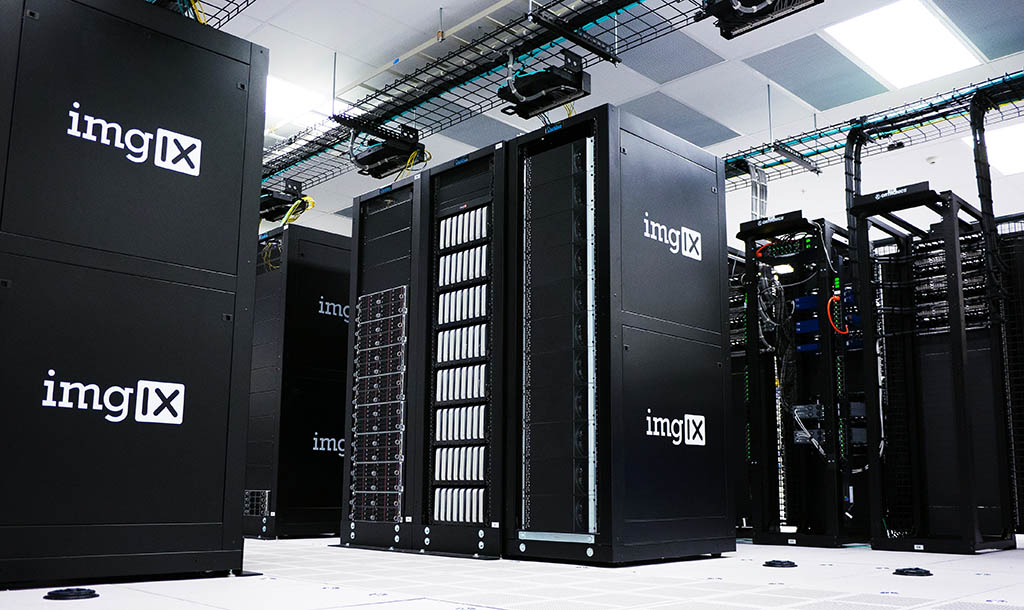
To store this increase in ‘cloud’ data, we will still require the creation of new physical data centres. At the end of 2021, there were 728 hyperscale data centres in operation globally; by 2026 this is expected to be over 1200. Not only is the number of these facilities growing but so is their capacity. “As the installed base of operational data centres continues to grow each year at double-digit percentage rates, the capacity of those data centres will grow even more rapidly as the average size increases and older facilities are expanded.”
The protection of data has often been seen as a cyber security issue rather than a physical security one. However, in theVerizon 2022 Data Breach Investigations Report, 82% of breaches involved the Human Element, including social attacks, errors, and misuse. This places the continued reliance on physical security at the forefront of the future of data security.
Data centres not only have to defend the cyber landscape they must defend the physical one as well. The latest inmulti-threat protection for physical security needs to be deployed to offer both Hostile Vehicle Mitigation and delay against forced entry at the same point. Higher and higher levels of physical security are being deployed to deter attacks, and when attacked offer longer levels of delay so a physical response can be deployed.
The risk of wholesale data loss means that the future of physical security will continue to be a cornerstone requiring the latest innovations to protect the almost double zettabytes in the coming years. We are starting to see this now, and the market will only continue to grow in the future.
Cost of Living
With reports of a global recession ringing loud across the mainstream media, will physical security play a part in the protection of the economy? Thankfully, the fear of increased crime during a recession is seen as a paradox.
Dr Siddhartha Bandyopadhyay, Senior lecturer in Economics, Department of Economics, University of Birmingham said “Socio-economic factors of course matter but their impact on crime is more complex. Unemployment may increase crime as unemployed people often have fewer options, but unemployment is also accompanied by people spending less which means there is less to steal. Further, with more people at home rather than at work, the property is left unguarded less often making it more difficult to steal. Average earnings also have an ambiguous effect on crime. Increased earnings suggest people do not need to steal but at the same time, it also implies greater spending on goods that can become targets for theft. Hence, the combined effect of unemployment and depressed wages may paradoxically reduce crime.”
However, the rise in organised crime against businesses rather than persons seems to be on the increase. Crime such as ram-raiding has been increasing in recent months as the cost-of-living crisis seems to deepen. Detective Chief Inspector Chris O’Brien (Cambridgeshire Police) said, “the intelligence we have, we believe ATM thefts are likely to increase in the coming months and are therefore launching a pro-active policing response.”
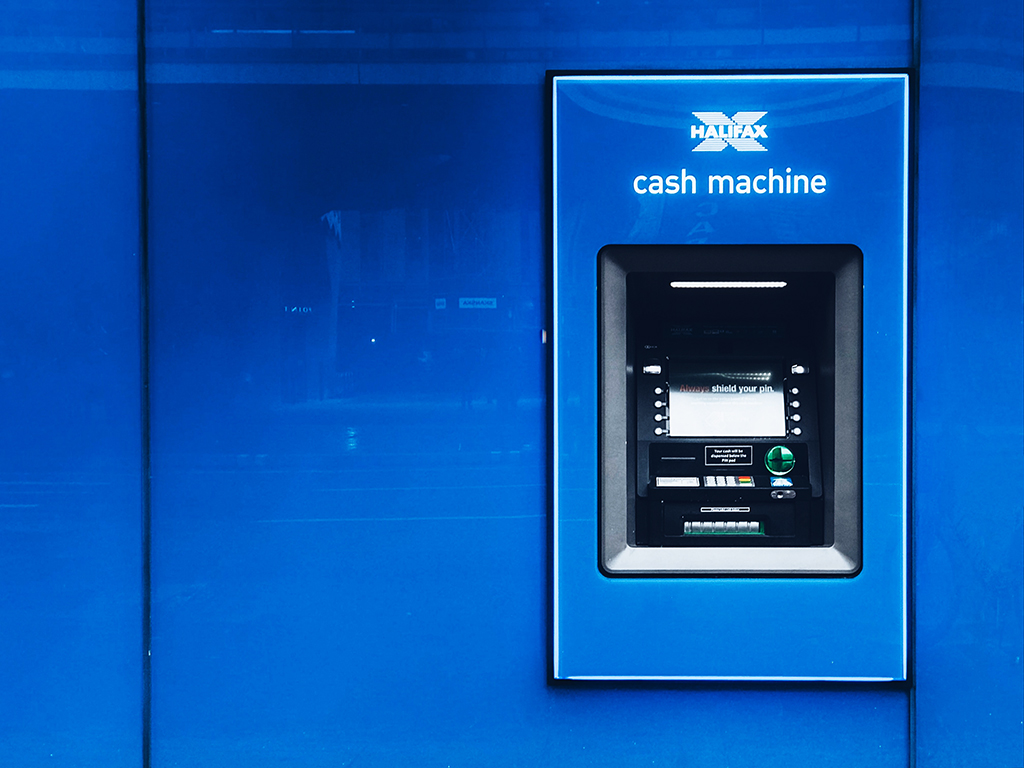
During COVID-19 Pandemic the use of physical cash dropped, however with the cost-of-living crisis a resurgence in physical cash has begun, meaning that ATMs must store more in them. The Post Office, which has 2,700 ATM locations across the country, said its branches oversaw a record £801m (€948m) in cash withdrawals in July. That is up almost 8% compared to June and 20% from the same period last year.
With an increase in cash held and reports that police expect more ram-raids over the coming months the use of physical security such as HVM solutions is a key aspect of protecting the economy. Removing the ability of a vehicle to ‘attack’ the machine deters robberies at rural locations. But ATM theft is not the only area we must look at to see the future of physical security during a cost-of-living crisis.
Distribution, warehouses, and logistic centres now hold more stock than ever before making them ideal targets for criminal gangs. Supply chain disruptions caused by the pandemic, the war in Ukraine, and the Suez Canal blockage in 2021 have left global companies scrambling to find warehouse space closer to their home markets. These warehouses need to be able to protect against the threat of theft.
In recent years, a move from the cheapest physical security products to higher security-rated solutions has resonated across the industry. Whereas once standard V-Mesh fencing systems may have surrounded these massive sites, now LPS 1175 A1 fencing systems are the common go-to system of choice for the companies and insurance companies underwriting the development.
As the situation evolves, the new norm will continue to play a major part in the future of physical security as further developments must not be seen to be weaker than existing ones.
Conclusion
Whilst only scratching the surface of the future of physical security, it can be seen to combat future threats and growing demand, innovations and new ways of working will be required. From a collective point, early engagement between clients, security consultants, emergency services, installers, and manufacturers can create a landscape that can deal with the latest threats.
Being able to combat threats at their inception offers a higher level of future safety and security. The sharing of information and lessons learned should not be restricted to post-incidents but used in the planning and development of the future of physical security. Working with best practices that are constantly reviewed and feeding back the latest challenges will enable an innovative and bright future for physical security.
]]>Security Upgrade for Middle Eastern Oil Company
https://www.zaun.co.uk/casestudies/security-upgrade/
Thu, 13 Jan 2022 11:24:14 +0000https://www.zaun.co.uk/?post_type=casestudies&p=36674The post Security Upgrade for Middle Eastern Oil Company appeared first on Zaun Limited.
]]>
Background
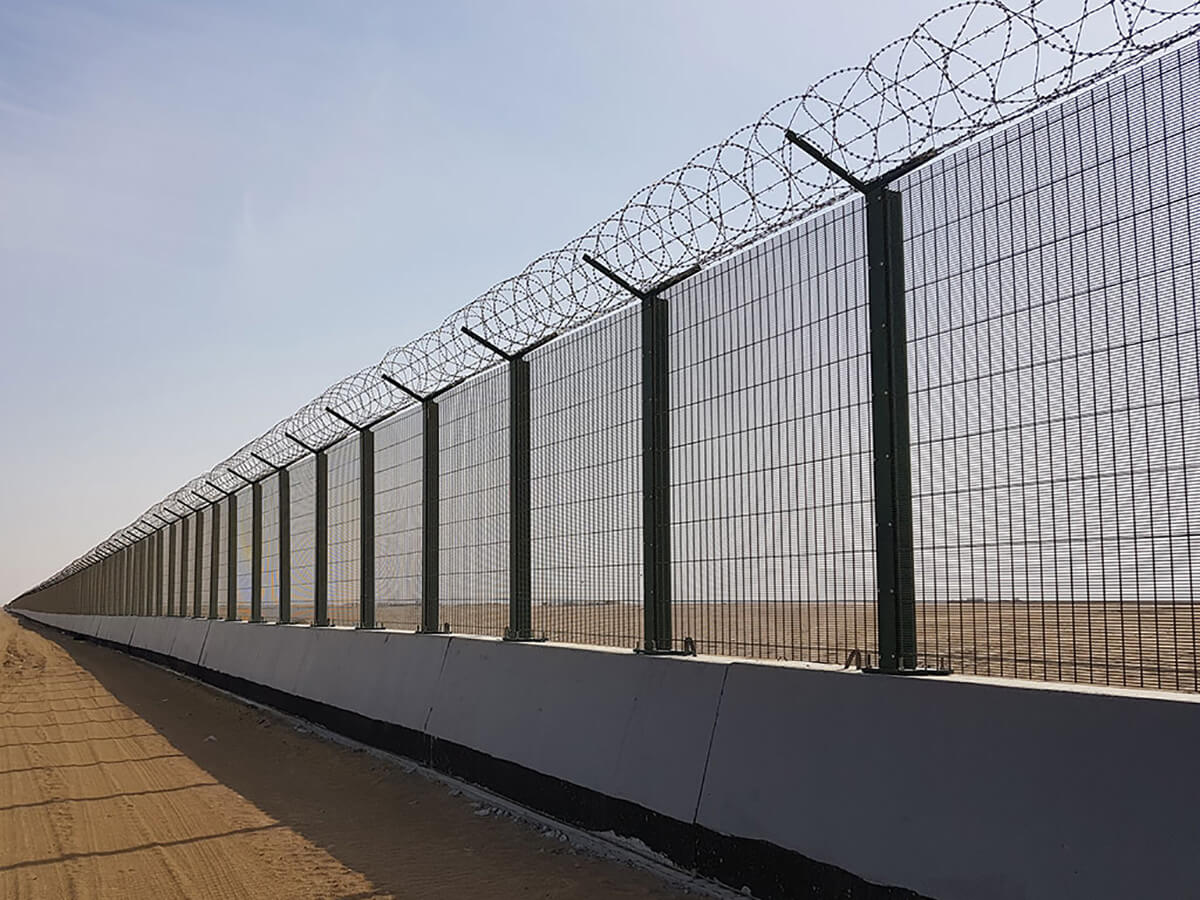
The Middle East is renowned for its large quantity of oil fields, and one of their biggest oil companies required a security update to a 9km site. The site, being the world’s second largest oil field, needed a high security upgrade to ensure the security of the perimeter was maintained.
This oil field provides around half of Kuwait’s crude oil production, roughly producing around 1.7m barrels of oil per day; and is the world’s most important source of energy thus security is of paramount importance.
The Problem
The site has important significance for the country’s oil production, but however consists of an extremely remote site situated within a desert, with a large open perimeter. The key priority is to ensure the protection of the field’s assets. Tensions across the regions and throughout the world means that outside threats and attacks are possible, highlighting the need for a high security perimeter. Potential attacks to the global oil market can result in the oil supply chain being threatened, which in turn can affect the industry’s economy.
It is an important task to maintain and improve upon the high security level surrounding the oil field, as the vulnerability of the oil industry can have serious effects on oil prices around the world.
The site has important significance for the country’s oil production, but however consists of an extremely remote site situated within a desert, with a large open perimeter. The key priority is to ensure the protection of the field’s assets. Tensions across the regions and throughout the world means that outside threats and attacks are possible, highlighting the need for a high security perimeter. Potential attacks to the global oil market can result in the oil supply chain being threatened, which in turn can affect the industry’s economy.
It is an important task to maintain and improve upon the high security level surrounding the oil field, as the vulnerability of the oil industry can have serious effects on oil prices around the world.
The Security Upgrade Solution
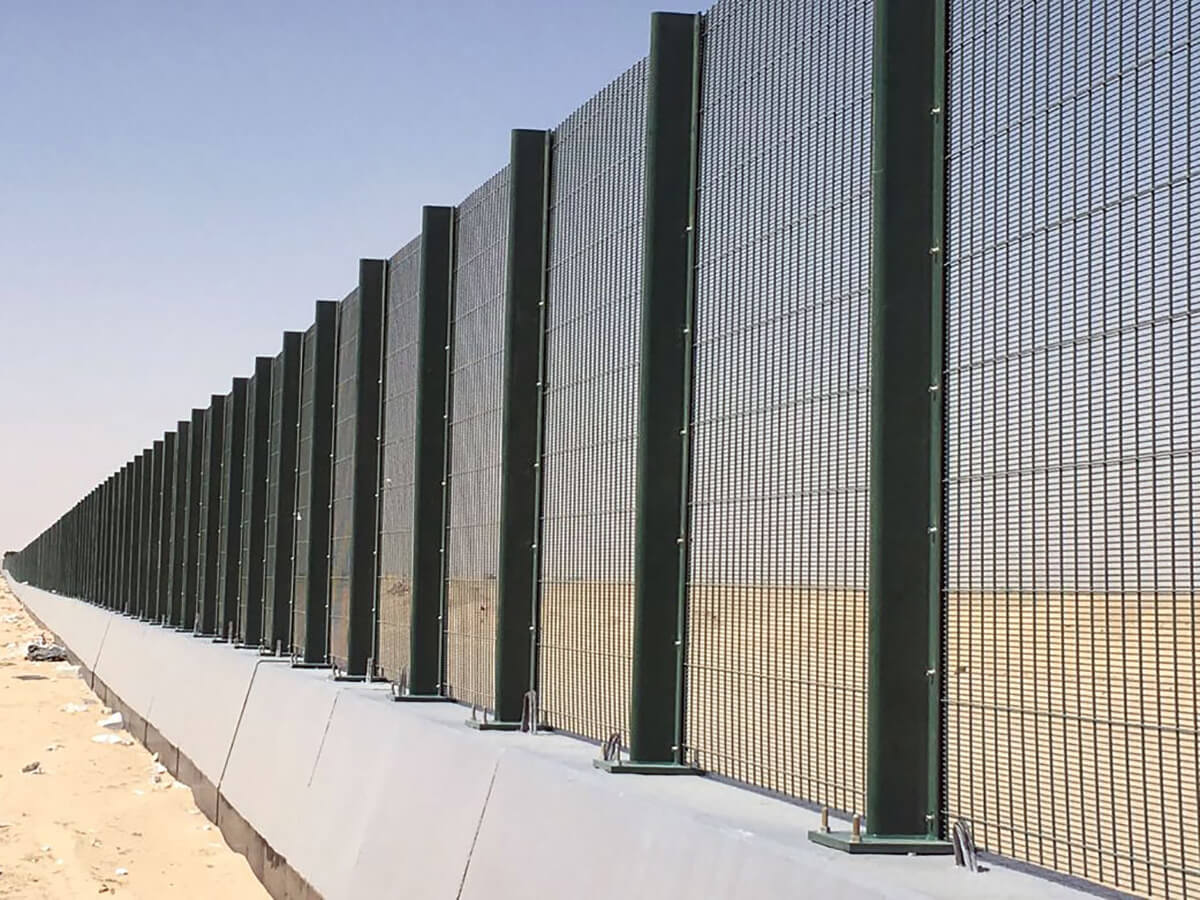
Zaun’s HiSec 358 Plus was supplied to secure over 9km of the site, with both security fencing and gates being manufactured in house. Zaun’s HiSec Plus uses standard HiSec 358 but adds 6mm vertical wires instead of 4mm to provide additional rigidity.
The 6mm wires added to the attack side of the fence, and an additional 4mm horizontal wire added to the rear of the fence make the panels much more difficult to cut or penetrate. The configuration of the mesh makes it extremely difficult to get a foothold to climb, thus increasing the security and decreasing the fear of attack.
]]>Points to consider when selecting perimeter fencing
https://www.zaun.co.uk/blog/selecting-perimeter-fencing/
Thu, 16 Dec 2021 13:36:38 +0000https://www.zaun.co.uk/?post_type=blog&p=17252When securing your premises, perimeter fencing can be a crucial element that offers premier levels of protection for property or people on site. Whether you’re looking to safeguard an industrial operation, a data centre, school play area or sports event, erecting perimeter fencing can be an ideal option. In the following passages, we’ll explore some...
]]>When securing your premises, perimeter fencing can be a crucial element that offers premier levels of protection for property or people on site. Whether you’re looking to safeguard an industrial operation, a data centre, school play area or sports event, erecting perimeter fencing can be an ideal option.
In the following passages, we’ll explore some of the key considerations that purchasers must account for when choosing security fencing to match their requirements.
Strength is paramount
A perimeter fence must be tough enough to ensure thieves and trespassers are kept out of your premises. Any security fence that cannot hold up under an intrusion attempt involving either brute force or built-for-purpose cutting tools will offer an easy breach for criminal minds. In addition, a security fence that isn’t well-designed with a protective coating can also degrade prematurely when exposed to the elements. This can lead to a loss of structural integrity, making it more vulnerable to attacks. With these factors in mind, always select a perimeter fence that is weather-proof, durable and can withstand different attack vectors.
Amp up your perimeter security
Along with standard security fencing, a pulse monitored perimeter solution can strengthen your defences. Electric fence toppings can be added, acting as a powerful deterrent to criminals keen to attempt unauthorised access and physically delaying their infiltration attempts. In addition, selecting an electrified solution is ideal for sites with remote locations and can cut operating costs, as less workforce is required to patrol properties.
Select an adaptable option
Finally, it’s worth choosing a perimeter fence that is easy to customise. Whether your site is expanding or the type of property or data kept there becomes more valuable, being able to extend or enhance your security measures can be critical. Choosing a fence type that has a modular design can be a wise move, allowing you to stretch your perimeter to provide appropriate cover for all areas of importance.
For robust perimeter fencing, you can depend on, contact our specialist team at Zaun today for advice and support, or browse our extensive range of security solutions here on our website.
]]>Why is a site survey essential before installing security fencing?
https://www.zaun.co.uk/blog/security-fencing-site-survey/
Thu, 25 Nov 2021 11:44:05 +0000https://www.zaun.co.uk/?post_type=blog&p=17242If you need to have perimeter fencing installed on your site, it is easy to rush into having it done quickly to enjoy the protection this fencing offers. However, it is best to pause a little though and carry out a site survey first. This is where the company that install the fencing for you...
]]>If you need to have perimeter fencing installed on your site, it is easy to rush into having it done quickly to enjoy the protection this fencing offers. However, it is best to pause a little though and carry out a site survey first. This is where the company that install the fencing for you inspect your site before starting work.
But why is a site survey so important to carry out in advance?
It helps to clarify the security level needed.
While most organisations that invest in fencing will do so to make their site more secure, not all need the same level of protection. A highly confidential site such as a prison, for example, has different needs than an SME on a local business park. A site survey looks at your organisation specifically to see what possible external threats you may face and which type of fencing/additions are best to use. This will ensure you get perimeter fencing which does the job but without being over the top.
Delivers the right look
As perimeter fencing is visible to the public, staff and visitors, how it looks is important. Fencing which does not look aesthetically pleasing, for example, will not inspire clients to come on-site to see you or see staff enjoying working there. A site survey allows you to look at what options there are in fencing and select the shape/colour/design you like best.
It gives an idea of the cost.
Any organisation which is thinking of erecting high-security fencing will have an eye on their budget. This makes pinning down how much fencing may cost vital. A site survey is handy because it allows you to speak with the company installing your fencing and let them know how much you have to spend. This then ensures they come back with a solution that fits your budget and avoids wasted time.
Contact Zaun today to book your site survey.
At Zaun, we first conduct a site survey when contracted to install security fencing. As the above shows, it is a vital first step in any project because it allows us to deliver your desired results. So contact us at sales@zaun.co.uk today to book your site survey.


 PASS
PASS FAIL
FAIL