The post Who’s Really Protecting Your Perimeter? appeared first on Zaun Limited.
]]>Why weld strength matters more than just wire gauge
In the world of 358 mesh fencing, not all panels are created equal. Many companies market panels by quoting wire thickness such as 3.9 mm, 4.0 mm, etc. But that metric alone doesn’t tell the full story.
We recently carried out a series of destruction tests on three 358 panels to compare real-world performance. The results show why relying on wire thickness alone can leave your perimeter exposed. We chose 358 as it is often seen as a High Security Fencing system and therefore a safe panel for many projects such as schools, transport and logistics, and commercial projects.
The Test Setup & Results

| Panel | Origin | Wire Diameter (mm) | Failure Load | % of Wire Tensile | Result |
|---|---|---|---|---|---|
| Panel 1 | UK | 3.96 – 3.99 | 4.9 kN | ~75% |  PASS PASS |
| Panel 2 | Turkey | 3.76 – 3.77 | 2.4 kN | 36.64% |  FAIL FAIL |
| Panel 3 | China | 3.86 – 3.90 | 0.8 kN | 12.21% | FAIL |
Panels 2 and 3 are currently being sold into the UK market, despite failing at less than half, and in one case less than one-sixth, of the strength of the UK-manufactured panel. How do we know? Because the manufacturers approached us directly and sent these very samples as their best examples. They even told us which UK fencing companies they already supply.
“These weren’t random imports. The manufacturers sent us these samples as their best panels to prove quality. They still failed.”

Why Weld Strength Is the Real Gatekeeper
“A mesh fence is only as strong as its weakest weld.”
1. The weakness is at the joints
In a mesh panel, the points where wires cross are welded. If those welds are poorly made, for example under-penetrated, porous, or inconsistent, they will fail well before the wire itself breaks. This is exactly what we saw in Panels 2 and 3.
2. Wire thickness ≠ panel strength
Thicker wire alone doesn’t always guarantee security. In our test, the Chinese panel used almost the same wire size as the UK panel, but it still failed at just 0.8 kN. The reason, its welds could not sustain the load.
3. Real-world loads demand reliable welds
From crowd loading to climbing attempts, fences experience repeated stresses and sudden impacts. If welds crack or shear under these loads, the perimeter is compromised. International standards specify testing because weld quality is mission-critical.
4. Quality control makes the difference
Strong panels require not just the right design, but also rigorous inspection and destructive sampling. That’s what ensures every batch performs consistently, not just on paper.
What to Ask Your Supplier
- Weld shear test data – not just wire diameter.
- Batch quality control – how often are destructive tests run?
- Standards compliance – do they meet BS 1722 requirements?
Watch the Test for Yourself
It is not the size of the wire that keeps a site secure, it is the strength of the weld. In our tests, the UK panel withstood more than double the destructive load of the Turkish panel, and over six times that of the Chinese panel.
The Turkish panel had the thinnest wire (average 3.765 mm), around 5.3% thinner than the UK panel (average 3.975 mm). It performed better than the Chinese panel (average 3.88 mm), but still failed at less than 40% of the overall tensile strength. The Chinese panel failed at less than 13% of the overall tensile strength. The UK panel passed at 4.9 kN, equal to 75% of the tensile strength.
You can see the results for yourself in the video below:
Final Word
Don’t be misled by numbers on a datasheet. A panel can look the same and feel the same but when tested, weak welds fail well before the wire does.
If you’re responsible for protecting a perimeter, insist on weld test data, not just wire thickness. It is the welds that stand between a secure site and a serious breach.
We invite you to visit our mesh manufacturing facility and see a destruction test in person. Contact us today to arrange your visit.
The post Who’s Really Protecting Your Perimeter? appeared first on Zaun Limited.
]]>The post The Private Sector Construction Playbook : Trust and Productivity appeared first on Zaun Limited.
]]>With the launch of Trust and Productivity: The private sector construction playbook we wanted to look at some of the key areas raised in the new playbook and how they relate to physical perimeter security and external works.
Historically, the UK construction industry has been characterized by a lack of openness, poor productivity, and a failure to invest in innovation. Whilst much progress has been made in addressing the problems, efforts have been focused solely on the public sector. Lessons learned through the supply chain in dealing with these issues help to form part of a new look for the private sector.
One of the biggest lessons learned in terms of physical perimeter security and external works has been the early engagement with the supply chain and the drive to standardisation. Lets us break down why these two areas are so important not just in delivering productivity within the construction process but also in additional value opportunities.
The following example demonstrates the difference between early engagement and without it.
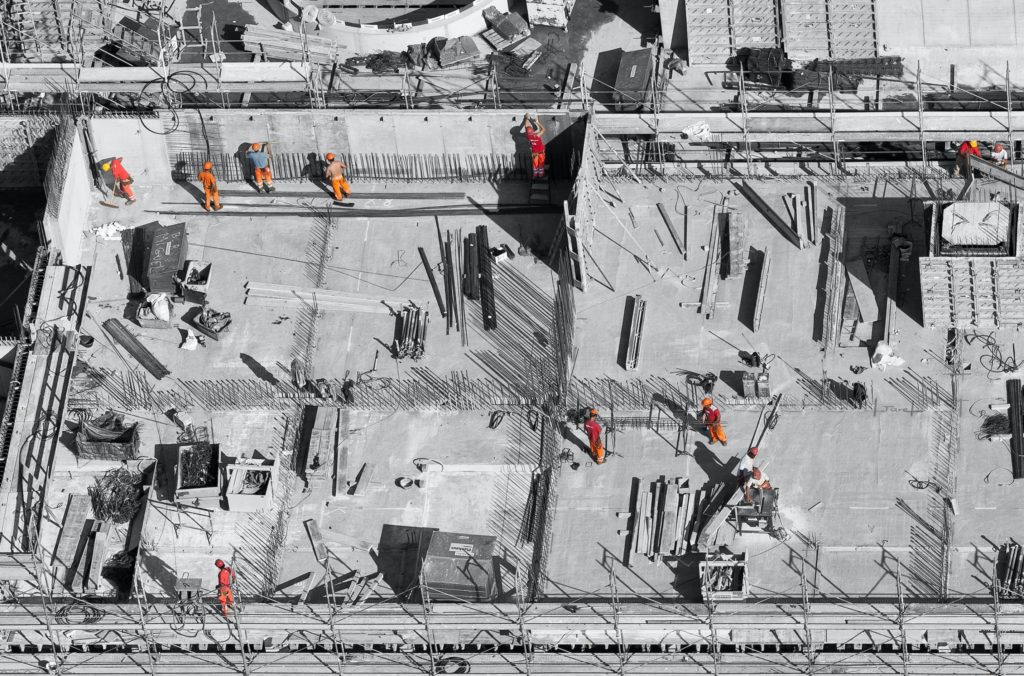
Early Engagement
Project A has a need for a security-rated fencing system that offers a 3 min minimum delay against attack. They want the system to be cost-effective through savings on materials and installation. They expect the fencing system to be designed, manufactured, and supplied within a set time frame due to site security requirements.
Project A team puts out an open call to all fencing manufacturing companies to present their solutions with added additional value. They conduct an open day where they learn the following:
- There are multiple solutions in the marketplace.
- Some solutions are double skins and some solutions are single skin, they can demonstrate quicker installation from a single skin system which reduces overall project costs. They discover that the fencing system needs to be LPS 1175 B3 (SR2) to deliver the required security rating.
- By using a standard industry height they can remove excessive design work and material waste in the manufacturing process so reducing the embodied carbon on the system as well as reducing the lead time for manufacturing.
- They discover that as there are multiple systems they can maintain competitiveness which can drive cost efficiencies in the project.
- Through early engagement they are able to prime the manufacturers for the scale, scope, and time frames required for the project. With the early selection of the system, they are also able to vest the manufacturing materials to hold the price of the raw materials and manufacturing costs.
- They are able to discuss standard widths for their ingress and egress solutions so that they can use ‘stock’ widths that require less design time and speed up the manufacturing process.
- Project A team feels that they have a solution that matches their needs, wants, and expectations as well as delivering added additional value to the project.
Without Early Engagement
Project B has a need for a security-rated fencing system that offers a 3 min minimum delay against attack. They want the system to be cost-effective through savings on materials and installation. They expect the fencing system to be designed, manufactured, and supplied within a set time frame due to site security requirements.
Project B team decides against any early engagement and decides to work on the project alone, leaving it to the subcontractor when appointed to deliver the required security-rated fencing system on a supply and install price. Project B sets a price per linear metre (PLM) as a budget cost based on current prices in the marketplace and selects fencing heights and gate widths based on what they think they need.
Project B team discovers the following when it comes time for the fencing system to be installed.
- They have one solution that is offered to them by the subcontractor
- The price they budgeted for the project no longer covers the rising costs in material prices and the fencing and gates are now over budget.
- The height of the fencing system was nonstandard and resulted in more manufacturing waste in its production which has increased the embodied carbon as fencing panels needed to be cut down to size for the project.
- Due to nonstandard heights and widths, excess design time was required across the fencing and gate systems which resulted in a longer lead time for design and manufacturing. This has had an impact on the timeline for the project.
- Project B has delivered the needs for the project but has not delivered added additional value and is unsure if the ‘best’ solution has been used. They have paid more for the solution than Project A team
Both of these are actually real-world examples of projects that Zaun has seen over the last 26 years as the last British in-house manufacturer of woven and welded mesh fencing systems. However, Project A has tended to be Public Sector Projects, Utilities, and Frameworks whereas Project B has always centered on Private Sector projects.
The private sector construction playbook outlines the following for market engagement:
Engaging with the construction supply chain ahead of a formal procurement process enables clients and contractors to plan and allocate resources, and lets suppliers become familiar with the project.
Ask the supply chain as soon as possible about the mechanics of the procurement process, how the works should be taken to market, and buildability, logistics, material availability, and programming. Involvement of the supply chain in this way will provide technical and specialist design input at the earliest stage of the project and encourage innovation.
Likewise, it allows the project team to ask key questions to assess the capability of the supply chain, such as:
- Does the supplier/manufacturer have a proven track record and ability to manage the nature and risk profile of the project?
- Does the supplier/manufacturer have the capacity as a business to take on a specific project?
You can read the full document here – https://media.bethebusiness.com/documents/5195_Construction_Brochure_SinglePgs.pdf
So how will you work with the supply chain moving forwards? With you be Project A or Project B?
The post The Private Sector Construction Playbook : Trust and Productivity appeared first on Zaun Limited.
]]>The post What is Bezinal 2000? appeared first on Zaun Limited.
]]>There are two methods to apply metallic coatings: a hot-dipped coat and an electro-plating finish. The wire first moves through a melted zinc wash until the steel wire has the correct coating thickness required; it then passes through a final zinc-aluminium wash where it then will be left to cool. The steel wire then moves through a chemical solution that contains the corresponding ions of the metallic coating, where electricity then dissolves the anodes in the metal and transfers the ions onto the wire. This process and the Bezinal 2000 advanced zinc-alu alloy give any wire product superior corrosion resistance and are one of the highest specs of galvanized wire currently available. It has a tensile strength of 450 N/mm² to 1100 N/mm², a minimum coating weight of 50g/m², with an average of 75g/m².
Why use Beznial 2000?
With Bezinal 2000 cathodic protection, thin coating, smooth surface finish, and a high-temperature performance staying strong up to the exposure of 350°C, it’s the perfect cost-effective choice that’s undergone rigorous testing. Under salt spray tests, Bezinal 2000 coated wires lasted up to 2,000 hours before the appearance of just 5% Dark Brown Rust, whereas simple Zinc coated wires lasted less than 500 hours. Under heat tests, it’s typical for regular hot-dipped galvanized (HDG) wires to experience alloy layer growth, exposing the wire to brittle alloy layers that can reduce the lifespan of the wire and create harmful and dangerous material waste, especially when the product is bent. However, Bezinal 2000 coated wires are entirely immune to this phenomenon due to an inhibiting action of the aluminium. Tests have repeatedly shown no layer growth with Bezinal 2000 coatings on tests ranging up to 245 °C for over 30 days. While under Kesterinch tests inside a controlled cabinet, where wires are exposed to simulated industrial pollution and volcanic activity, Bezinal 2000 offers the best performance, beating regular zinc wires by up to 8 times, lasting 160 cycles of exposure before just 5% of dark brown rust sets in once again.
What can it be used on?
Bezinal 2000’s advanced zinc-alu alloy can be applied on wires intended for a wide variety of uses. It has already been used on spiral knotted fences, wire fencing for small animal cages, slope meshes (hexagonal meshes), sheep fencing on farmland, chain link fences, vineyard wire, and even gun nails for longer life spans. It has also been used on Zaun’s ArmaWeave woven mesh high-security fencing, which was specifically designed to be installed on sites of critical national importance (CNI) in the UK, which has been tested and approved for UK government use by CPNI and various other government departments such as the MoD.
The post What is Bezinal 2000? appeared first on Zaun Limited.
]]>The post Delivering Excellent Corrosion Resistance appeared first on Zaun Limited.
]]>In short, they are all essentially the same product; Galzal, Bezinal, Crapal and Galfan are all trademarks and brand names, just from different wire suppliers.
What are these products?
All these names refer to wire (or other steel products) that has been galvanised in an alloy of Zinc and aluminium as opposed to normal galvanising that is just zinc. We will refer to it as a zinc-al coating. The alloy is typically 95% zinc and 5% aluminium (Zn95Al5), but variations up to 20% aluminium have been made.
While traditional galvanised coatings deliver a good level of service life, zinc-al has been shown to offer superior corrosion resistance compared to its zinc-coated steel counterpart. In addition, 5% aluminium can double life, and 10% increase life four-fold (in salt-spray tests).
Sometimes the name will be followed by the term “class A”. Class A refers to the zinc/aluminium coating thickness as detailed in BS EN 10244-2. This thickness varies with wire diameter, but as a typical example class A on 4mm is 275g/m2. Zinc-al could also be supplied as class D with a much thinner coating, but generally, as a premium product, it is class A.
How was it born?
It all started in the 1970s when research was carried out to look at the effectiveness of zinc coatings that contained a percentage of aluminium and various tests were conducted with zinc coatings containing up to 15% of aluminium. It became clear that zinc that contained 5% aluminium delivered great corrosion resistance. Still, it proved difficult in the early days to solve the issue of unwetted bare spots that detracted from the commercial usefulness of the coating as a product.
It was subsequently discovered that when a rare earth mischmetal that contained cerium and lanthanum was added, it resolved the problem of wettability whilst improving coating ductility and fluidity at the same time. It was this mischmetal formulation that led to the creation of the product that was named Galfan(3)
Why Galfan(3)?
GalFan has been a recognized trademark since 1981 when the International Lead Zinc Research Organization (ILZRO) managed to obtain worldwide patents relating to this new alloy for anti-corrosion coating. The product’s name was derived from a comment made by the head of the French Steel Information Centre, who described the product as “galvanisation fantastique”, subsequently shortened to GalFan.
How is it different to other pre-galvanised wire?
Zinc-al delivers improved corrosion protection compared to like for like thickness of standard pre-galvanised wire, typically, it is applied thicker to give substantially enhanced life.
Additional powder coating is not required on any products manufacture in Zinc-al. The high-performance coating alone provides enough protection for installation on-site and increases the fence’s lifespan without the need for maintenance or cleaning.
Zinc-al wire can be used with excellent life expectancy even after welding with the cathodic reaction, effectively healing any damage from spot welding. Thus generally, today, panels that will be painted have a simple zinc coating to class D, whereas panels that will be used in their galvanised state should be made from zinc-al wire.
Why and when you need it
Preventing rust should always be a consideration for any steel fence that is installed. The materials and treatment methods used will have a major impact on the longevity of the fence.
Without protection, any steel product will rust over time due to atmospheric conditions. The level and speed of corrosion will depend on the environment in which the product is installed. If you do not know the corrosion rate of your site, you can find out using this easy to use corrosion map (Corrosion Map).
Zinc-Al is typically required for sites where durability is required and minimal maintenance and cleaning will occur, but an enhanced level of corrosion protection is still required. Usually these sites are MOD sites, mental health units, prisons and other government institutions. It is important for these sites that the fencing installed lasts, as they cannot afford for there to be any weaknesses in the perimeter due to corrosion.
What products are typically available with this level of protection?
References
(1) Bezinal – registered trademark of Bekaert
(2) Crapal – registered trademark of ArcelorMittal Bissen & Bettembourg
(3) Galfan – registered trademark of Galfan Technology Centre LLC
(4) Galzal – registered trademark of Zaun Limited
The post Delivering Excellent Corrosion Resistance appeared first on Zaun Limited.
]]>The post Zaun’s infrastructure investment continues with a brand new Coil Grabber appeared first on Zaun Limited.
]]>To that end, we’re proud to announce our investment in a brand new Pfeifer three tonne wire coil grab.
What will the coil grabber do?
Our new wire coil grab is going to allow us to lift coils with greater safety and efficiency. Installed in the Zaun mesh manufacturing facility, where our team are already beginning to see the benefits it can offer.
The wire coil grab allows vertical storage of wire, meaning there’s no longer any need to roll the coils. Another clear benefit is that it offers consistent weight and height between individual packed coils, which makes storage that much more efficient. We are able to plan with regularity how many coils will be able to fit safely into a vertical stack, without the need for chocks.
These stacked coils ultimately take up less space in our storage facility, and allow us to bring even more uniformity to the manufacturing process. This is a part of our drive to continually drive up the already exceptional quality control we implement.
Why have we invested?
As specialists in the manufacturing of a range of mesh products, it’s essential that we’re confident in the storage and transportation of our wire coils. This is for many reasons, the first of which is health and safety. Tightly packet coils can present a considerable injury risk if not handled with appropriate equipment – our new coil grabber allows us to move coils with a greatly reduced risk.
The new coil grabber allows us to transport and store coils easily and efficiently, which allows us to make much better use of our available storage space. The quicker we can store coils, the quicker we will be able to continue the overall manufacturing process. This, ultimately, leads to decreases in lead times and allows us to fulfil orders faster.
Investment is one thing, and a very important one, but it’s of equal importance that the investment is made into machinery that will make a difference.
Making efficiency improvements is at the core of everything we do at Zaun, however those improvements must never come at the cost of health and safety or overall quality control. Our investment in the three-tonne coil stack allows us to make those improvements in efficiency, while also offering our clients the peace of mind that our impeccable quality standards remain.
More investments going forward
Our coil stacker is just one of many investments in infrastructure planned for Zaun. Going forward we’re committed to making sure we’re able to improve our storage and manufacturing processes in any way possible. If we can make savings in time and efficiency without the need to sacrifice quality, it allows us to continually improve the value proposition we offer our customers.
We have already taken delivery of our coil stacker and are putting it to work, and the benefits are already beginning to manifest. This is just one of many key investments Zaun intends to make going forward – so keep watching this space for more updates.
The post Zaun’s infrastructure investment continues with a brand new Coil Grabber appeared first on Zaun Limited.
]]>The post Zaun Renew Made in Britain Membership appeared first on Zaun Limited.
]]>What is the Made in Britain scheme?
The Made in Britain scheme is made up of British businesses that are proud to put the “Made in Britain” standard mark onto everything that they produce. Much is spoken about the lack of manufacturing Britain has to offer, and while there is always room for improvements, the reality of the fact is Britain still produces many high-quality products. From the artisanal to the engineering-focused, our homegrown manufacturing and design talent is world-class.
The Made in Britain scheme awards a “Made in Britain” check-mark to member organisations. To earn it, however, there must be rigorous quality control standards in place to ensure the products and services they’re offering are worthy of that moniker. The scheme is intended to shine a light on the sheer quality and variety that is available throughout the British manufacturing industry. This is something we’re more than proud to be a part of at Zaun.
We wear our Made in Britain checkmark literally on our sleeves.
What does it mean for our products?
Our Made in Britain membership is a testament to the intensive quality control processes that we have in place at Zaun. Our whole manufacturing process has been tailored to ensure that efficiency and time savings are made wherever possible. But none of that is allowed to cut into the quality control standards we set for ourselves. We know that our clients are discerning, which means we take it as a point of pride that we ensure the products we offer them are only of the best possible quality. The fact that we have so many long-term clients is proof our efforts are worthwhile.
The Made in Britain checkmark is more than just about that, however – it’s about ensuring the world is aware that Britain still has a thriving manufacturing industry. We have a highly talented workforce who are consistently creating better and better products to service all manner of industries. That’s why it makes sense to buy British.
A homegrown, thriving manufacturing industry is essential to cultivate, as it also gives us the onus to encourage the next generation of manufacturing specialists into the workforce. Skills, knowledge, and understanding are passed down, techniques are constantly honed, and the prestige of the Made in Britain checkmark keeps growing.
Our industry focus going forward
We’re committed to improving the understanding of the quality offered by British manufacturing on both a national and international scale. We want people at home to know what is available on their own doorstep, and people on the other side of the world to know what kind of quality they can invest in. Quality is a global currency.
To that end, the Made in Britain checkmark is a simple and clear way to illustrate that any business, ours included, is operating to the strictest possible quality control standards. This isn’t a cheap marketing ploy, it’s an earnest declaration of pride resulting from the effort we know our team makes on a daily basis to provide our clients with the best quality products. Without rigorous testing, the mark would be meaningless. As it stands, it has been well-earned.
This is why Zaun is proud to renew its Made in Britain membership for another year, as a British manufacturer who supports British manufacturing.
The post Zaun Renew Made in Britain Membership appeared first on Zaun Limited.
]]>The post Zaun Maintains Cutting Edge with New Fibre Tube Laser appeared first on Zaun Limited.
]]>To answer our ongoing productivity requirements Zaun has now purchased a brand new Adige LT7 fibre laser, described by its designers as part of “The new generation in tubes laser cutting.”
This state-of-the-art solution will enable us to not only replace the laser’s predecessor but enhance productivity and work even more efficiently than ever before.
Upgrading a key component in Zaun operations
The laser currently used at Zaun is an integral part of our production process but due to its age, it has been struggling with reliability issues. With its significance recognised as being critical to how we operate, the decision was taken to make an investment in not simply a like-for-like but a substantial upgrade, by purchasing a more current cutting machine with improved capabilities.
Selecting the right substitution
Technical experts at Zaun conducted extensive research to find the ideal laser cutter. Future proofing our business is a critical element when making a sizeable investment in any piece of key equipment, so the solution selected needed to offer not just high-quality laser cutting but be well-built to serve our requirements as we continue to expand. That’s why the Adige LT7 fibre laser was chosen for its superior design as well as its high-tech bevel cutting abilities and advanced attributes working with flats, angles, and channels.
Work to be executed by the new fibre tube laser cutter
Once installed, the Adige LT7 fibre laser cutter will be used by Zaun to produce the parts for its extensive range of security perimeter solutions that have served in many high-profile and prestigious installations across the country. Topping brackets, fencing posts, gate frames and other requirements for our fortified fencing systems will all be cut with perfect precision by the latest advances in laser cutting technology.
Enhanced precision and productivity with the Adige LT7 fibre laser
Exceptionally versatile, the LT7 boasts a broad range of tube processing and can cut square, round or rectangular tubes with ease. It benefits from 6.5m out-feed and is capable of cutting up to 150×150 square. Productivity-wise it also excels with cutting accuracy never compromised even at high accelerations on account of the robust mechanics of its system, ideal for boosting processing times of tubes and profiles. Work speed is enhanced further by active tilt for the cutting head that enables operators to quickly cut materials with a thin wall.
Production is also improved as both long or short pieces can be unloaded from the rear or front of the cutting equipment, separating any scraps without ever needing to halt the work cycle.
The LT7 also has the advantage of 360° flexibility allowing operators to use the beam loader and work independently. Open or special profiles can be loaded easily or small batches of only a few bars added, perfect for limited production quantities.
Entirely automatic, no machine stops are necessary. After the end of every batch, the LT7 resets for the following cycle with its loader, front bezel, rear spindle along with its intermediate supporters all adapting automatically to the next section required to be cut.
The LT7 can also be configured to work around the clock seven days a week to optimise output. In seconds, its unloading chains can be easily detached from its rear loader and connected instead to an automatic store and robotic loading system.
Automatic loading requires no manual adjustment to the machine’s rear loader over its multiple sections. The LT7 is fully accessible from the upper and rear side so operators can load material directly with forklift or bridge crane.
High dependability can be achieved for any type of tube. The LT7 has self-adjusting guides that can adapt instantly to the weight and dimension of any tube requiring cutting. From flexible lighter tubes to heavier and more rigid items all can be cut with expert precision to make the specific elements required for of our security fences.
Adopting new technology to help those we serve
At Zaun we are constantly evaluating the way we work and the fencing options we produce so we can evolve and improve the service we provide. Keeping informed of the latest technological advances for industrial processes allows us to make selections that can benefit our customers as we offer a more seamless service, installing more refined and robust security solutions, perfectly cut to order.
Whether you’re maintaining health and safety rules while operating a construction site or protecting pupils at a school or college, if you require perimeter security fencing contact us for advice and suitable solutions.
The post Zaun Maintains Cutting Edge with New Fibre Tube Laser appeared first on Zaun Limited.
]]>The post British manufacturer’s mental health investment paving the way for hope in 2021 appeared first on Zaun Limited.
]]>The West Midlands-based manufacturer of metal and mesh fencing, has appointed one male and one female employee as ‘mental health champions’. The workplace representatives were recently trained up to ‘First Aid for Mental Health’ accreditation delivered by a leading national health and safety solutions training company.
Skilled up and certificated to ‘Qualsafe Level 2 Award in First Aid for Mental Health’ accreditation, they now support their colleagues, of all levels, with an empathetic and trained ear to talk through any issues, offering guidance and support where appropriate.
The value of supporting positive mental health in the workplace is now being recognised as a vital component to enhancing a person’s happiness and self-esteem, in turn increasing productivity. In a supportive workplace, in which both employers and employees invest in one another’s well-being, everyone can thrive.
Everybody has mental health considerations in life. When you are living with strong mental health and a positive frame of mind, you can make the most of your potential and enjoy better personal and professional relationships. You feel more prepared to cope with the trials of life and are encouraged to embrace more friendships and experiences.
A specialist metal and mesh fencing manufacturer with an international customer base, Zaun employs fantastic, hard-working people. The company designs, manufactures and produces engineer leading perimeter systems for high-security events, including major sporting and stadium fixtures.
The Zaun ethos is simple: to go the extra mile in solving the fencing problems that others ignore. David Sayers, Health & Safety Manager of Zaun, said:
“We understand that these are challenging times for many. The promotion of a positive mental health culture in our workplace is our attempt to go the extra mile for our staff. Not to ignore the building pressures of the work-life balance, but to support staff through the difficult times in life we all face.”
As part of the first aid mental health training, the champions were taught a range of skills including how to identify and understand various mental health conditions; how to design and deliver a mental health action plan; how to provide first aid mental health support and deal with issues involving drugs and alcohol. The course from PLT Training Limited also helps them to look closer at their own work activities and contribute to Zaun’s health and safety management system.
The team at Zaun is encouraged to see other companies also leading the way in recognising the importance of supporting positive mental health in the workplace, as we emerge with caution from the difficulties of 2020 and step into the possibility and potential that 2021 brings.
The post British manufacturer’s mental health investment paving the way for hope in 2021 appeared first on Zaun Limited.
]]>The post The importance of good adhesion in powder coating appeared first on Zaun Limited.
]]>In this article, we’ll be taking a closer look at the benefits of powder coating, the importance of adhesion in the coating process and a few methods you can use to improve the adhesion of your powder coating.
What are the benefits of powder coating?
One of the main benefits of powder coating over traditional painting is that there is no wet paint present that could evaporate into the surrounding air, reducing the risk of environmental damage. As well as being an eco-friendly option, powder coating is also a much smoother and more seamless method of adding a layer of colour to fencing as it forms a chemical bond with the metal underneath. Not only is this a much safer and easier method of application, but it also functions as a protective layer to prevent your fence from developing rust over time. In addition, with proper maintenance and cleaning, a layer of powder coating can last for many years.
Why is good adhesion important?
For your fencing system to be adequately protected against rusting, it’s essential for your protective layer of powder coating to properly adhere to the metal so that it will not wear away over time. Furthermore, for your fencing system to acquire the optimal level of corrosion protection, you need to meet the main international standard of ISO 12944 by following its series of detailed instructions during production.
How can I improve the adhesion of powder coating?
To improve the adhesion of your powder coating, it’s essential to make sure that the surface to be coated is as clean as possible. There are several methods of cleaning metal surfaces, such as:
Wiping
One of the most straightforward methods of cleaning your fencing before adding a layer of powder coating is by wiping it with a solvent to remove any contaminants or oils on the surface. However, this isn’t the most accurate method of cleaning your metal surface, as the rag you use to wipe up the contaminants can become saturated with oil.
Washing
The most effective method of cleaning metal surfaces is by automatic washing, dipping or pressure washing. Applying hot water to the metal can break down the layer of oil on the surface and reach smaller gaps. Adding a detergent to your cleaning solution is also a great way of clearing away any polishing compounds, waxes or oils that could prevent your powder costing from adhering.
Blasting
Blasting your metal fence with shot or sand is another less conventional method of stripping the surface of the metal before refinishing it. However, while the blasting process can smooth over any surface defects that might be present in raw metal, it does not eliminate any contaminants or oils that might be present.
At Zaun, we add a layer of electrostatically applied polyester powder coating to all of our fencing products, so if you’re looking for a long-lasting fencing system that you can depend on, take a look at our range of products today.
The post The importance of good adhesion in powder coating appeared first on Zaun Limited.
]]>The post Welded mesh fencing: What are the key benefits? appeared first on Zaun Limited.
]]>But what are the major benefits it offers?
It is tough and strong.
Perhaps the key benefit which welded mesh fencing offers is how robust it is. This is an essential feature as it means the fencing is strong enough to keep intruders out. It also means that it will not degrade quickly, and you, therefore, spend less on maintaining or replacing it. This strength is beneficial and allows this type of fencing to deliver outstanding security to any site.
Suitable for many different applications
Another convenient feature that welded mesh perimeter fencing has is versatility. This type of fencing is suitable for pretty much any application you can think of! It is an ideal choice from schools to children’s playgrounds, businesses, industrial sites, airports, military bases, and more. This is not only down to the superb protection it offers and great value for money but also its ability to be outside in all weathers. So come wind, rain or snow; the welded mesh will perform as expected.
Weldmesh looks great.
While the security any fencing gives is important, it should also look great too. This will see a professional image presented to clients and make your site an attractive place to work. Welded mesh certainly hits the mark here and has bags of style. If you choose to go with additional components such as laser cut shapes or fence toppings, you can add even more visual appeal to it.
Contact Zaun today for top-quality welded mesh fencing
Here at Zaun, we manufacture top-class welded mesh security fencing. Our fencing offers all the above benefits and will help provide excellent protection once in place. Get in touch at sales@zaun.co.uk today for more details.
The post Welded mesh fencing: What are the key benefits? appeared first on Zaun Limited.
]]>